11 — HTTP xabarlari: PSR-7 va PSR-17
⬅️ Oldingi: 10 — PSR standartlari va PHP-FIG · 🏠 README · Keyingi: 12 — PSR-15 middleware pipeline ➡️
Bu bobda: har qanday web-framework poydevorini — HTTP xabarini obyekt sifatida modellashtirishni o'rganamiz. Avval HTTP so'rov/javob anatomiyasini chuqur ochamiz (metod, target/URI, sarlavhalar, tana, status — har biri nima). So'ng PHP da boshlovchilar duch keladigan eng yomon odat — kod ichida hamma joyda
$_GET/$_POST/$_SERVER/php://inputga to'g'ridan-to'g'ri murojaat qilishni — nima uchun faqat I/O chegarasida (eng chetda) qoldirish, ichkarida esa hammasini obyekt qilish kerakligini (test, qayta ishlatish, immutability) tushunamiz. Markaziy standart — PSR-7 (MessageInterface,ServerRequestInterface,ResponseInterface,UriInterface,StreamInterface) va uning eng nozik xususiyati — immutability:withHeader/withStatus/withBodyaslni o'zgartirmasdan yangi nusxa qaytaradi, va nega aynan shu narsa middleware pipeline ni xavfsiz qiladi. PSR-17 (factory'lar) qanday rol o'ynashini ko'ramiz. Amalda: minimal PSR-7 ni o'zimiz yozamiz, keyin haqiqiynyholm/psr7paketini Composer bilan o'rnatib ishlatamiz, globaldanServerRequestquramiz,ResponseyaratibwithXbilan zanjirlaymiz, immutability ni jonli ishga tushirib isbotlaymiz. Bu bob — Wave 3 (framework internals) ning birinchi g'ishti: u 05 — tip tizimi, 08 — Reflection va atributlar va 10 — PSR standartlari ga tayanadi; boshlovchi MVC tushunchasi uchun ../php/37-mvc-loyihani-tartibga-solish.md va ../php/38-foydali-dizayn-andozalari.md ga qarang.
HTTP xabari nima: so'rov va javob anatomiyasi
Web — bu, mohiyatan, xabarlar almashinuvi. Brauzer (yoki boshqa klient) serverga so'rov (request) yuboradi, server javob (response) qaytaradi. Ikkalasi ham — oddiy matnli xabar, aniq tuzilishga ega. Framework yozish — bu o'sha matnni qulay obyektga aylantirish va aksincha demakdir. Shuning uchun avval xabarning ichki tuzilishini puxta bilishimiz kerak.
So'rov (HTTP Request) uch qismdan iborat:
- Start qatori (request line):
POST /api/users?role=admin HTTP/1.1 - Metod (
GET,POST,PUT,PATCH,DELETE, ...) — niyat: o'qishmi, yaratishmi, o'chirishmi. - Target / URI — qaysi resursga: yo'l (
/api/users) va so'rov qatori (?role=admin). - Protokol versiyasi —
HTTP/1.1,HTTP/2. - Sarlavhalar (headers):
nom: qiymatjuftliklari — metama'lumot. MasalanHost,Content-Type,Accept,Authorization,Content-Length. - Tana (body): ixtiyoriy yuk —
POST/PUTda odatda JSON yoki forma ma'lumotlari.GETda ko'pincha bo'sh.
Javob (HTTP Response) ham xuddi shunday tuzilgan, faqat birinchi qatori boshqacha:
- Status qatori (status line):
HTTP/1.1 201 Created - Protokol, status kodi (
200,201,404,500), sabab iborasi (reason phrase —OK,Created,Not Found). - Sarlavhalar —
Content-Type,Location,Cache-Control,Set-Cookieva h.k. - Tana — qaytariladigan yuk (HTML, JSON, fayl).
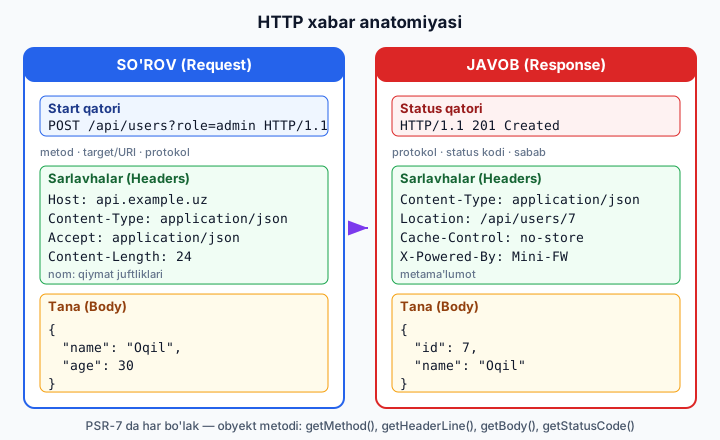
Diqqat qiling: so'rov ham, javob ham bir xil umumiy skeletga ega — start/status qatori, sarlavhalar, tana. Aynan shu umumiylik PSR-7 da MessageInterface (umumiy poydevor) sifatida ajratilgan, undan esa RequestInterface va ResponseInterface meros oladi. Bu — yaxshi obyektga yo'naltirilgan modellashtirishga klassik misol: takrorlanuvchi qismni ota-interfeysga chiqarish.
PHP da xabar qayerdan keladi: superglobal'lar
An'anaviy PHP da, web-server (Apache/nginx + PHP-FPM) so'rovni qabul qilib, uni superglobal massivlarga "yoyib" beradi:
| Manba | Nima |
|---|---|
$_GET |
URL dagi so'rov qatori (?role=admin) |
$_POST |
application/x-www-form-urlencoded yoki multipart forma tanasi |
$_SERVER |
metod, URI, protokol va sarlavhalar (HTTP_* prefiks bilan) |
$_COOKIE, $_FILES |
cookie'lar va yuklangan fayllar |
php://input |
xom tana (JSON ni o'qish uchun shu kerak, $_POST emas) |
Bu — qulay, lekin tuzoq. Keyingi bo'limda nima uchun bularga butun kod bo'ylab tayanish yomon ekanini ko'ramiz.
Muammo: superglobal'larga to'g'ridan-to'g'ri tayanish
Boshlovchi PHP kodi odatda shunday ko'rinadi:
<?php
declare(strict_types=1);

// ❌ Yomon: biznes-mantiq superglobal'larga to'g'ridan-to'g'ri bog'langan
function ruxsatBormi(): bool
{
    $role = $_GET['role'] ?? 'guest';        // ❌ global holatga bog'liq
    $token = $_SERVER['HTTP_AUTHORIZATION'] ?? '';  // ❌ yana global
    return $role === 'admin' && $token !== '';
}
Bu funksiyada uchta jiddiy nuqson bor:
- Test qilib bo'lmaydi.
ruxsatBormi()ni avtotestda chaqirish uchun$_GETva$_SERVERni qo'lda "soxtalashtirish" kerak — global o'zgaruvchilarni o'zgartirish. Bu nopok, testlar bir-biriga ta'sir qiladi (biri$_GETni o'zgartirsa, ikkinchisi buziladi). - Qayta ishlatib bo'lmaydi. Ushbu funksiyani CLI dan, navbat (queue) ishchisidan yoki ichki chaqiruvdan ishlata olmaysiz — u faqat "haqiqiy HTTP so'rov" bo'lgandagina ishlaydi.
- Manba yashirin. Funksiya imzosiga qarab uning nimaga bog'liqligini bilolmaysiz. U
$_GETga ham,$_SERVERga ham, balki yana o'ntasiga ham bog'liq bo'lishi mumkin — buni faqat butun tanani o'qib bilasiz.
Yechim — bog'liqlikni oshkor qilish (explicit dependency). Superglobal'lardan bir marta, eng chetda (front controller'da) o'qiymiz, ularni bitta obyektga (ServerRequest) joylaymiz va shu obyektni argument sifatida uzatamiz:
<?php
declare(strict_types=1);

interface SoxtaSorov   // soddalashtirilgan ko'rinish (haqiqatda PSR-7 ServerRequestInterface)
{
    public function getQueryParams(): array;
    public function getHeaderLine(string $name): string;
}

// ✅ Yaxshi: bog'liqlik argumentda — oshkor, test qilinadigan, qayta ishlatiladigan
function ruxsatBormi(SoxtaSorov $req): bool
{
    $role = $req->getQueryParams()['role'] ?? 'guest';
    $token = $req->getHeaderLine('Authorization');
    return $role === 'admin' && $token !== '';
}
Endi funksiya imzosining o'zi aytadi: "menga SoxtaSorov (ya'ni so'rov obyekti) kerak". Testda biz soxta so'rov obyekti beramiz — hech qanday global holat yo'q. CLI dan ham, navbatdan ham — istalgan joydan so'rov obyektini yasab uzatish mumkin.
Asosiy g'oya — I/O chegarasi (boundary). Superglobal'lar — bu kirish/chiqish chegarasi: ular tashqi dunyo (web-server) bilan tutashgan joy. Bu chegarani eng yupqa qiling. Chegarada bir marta
$_GET/$_SERVER/php://inputdan o'qib obyekt yasaysiz; undan keyin butun ilova faqat obyekt bilan ishlaydi. Bu — "imperative shell, functional core" tamoyili: nopok I/O ni chetga, sof mantiqni markazga.
Bu yondashuv ../php/38-foydali-dizayn-andozalari.md dagi Dependency Injection g'oyasining HTTP ga tatbiqidir: bog'liqlikni yashirma — argumentda ber.
PSR-7: HTTP xabarlari uchun standart interfeyslar
Agar har bir framework o'zining "so'rov obyektini" yaratsa (Laravel Request, Symfony Request, Slim Request — har biri boshqacha), ularning kodi bir-biriga mos kelmaydi. Bir framework uchun yozilgan middleware ni boshqasida ishlata olmaysiz. Aynan shu muammoni 10-bobdagi interoperability g'oyasi bilan PSR-7 hal qiladi: u HTTP xabarlari uchun umumiy interfeyslarni belgilaydi. Bu interfeyslar psr/http-message paketida yashaydi.
PSR-7 beshta asosiy interfeysni belgilaydi:
| Interfeys | Roli |
|---|---|
MessageInterface |
So'rov va javobning umumiy qismi: protokol, sarlavhalar, tana. |
RequestInterface |
MessageInterface + metod va URI (klient tomonidan yuboriladigan so'rov). |
ServerRequestInterface |
RequestInterface + server tarafidagi qo'shimchalar: query params, parsed body, cookie'lar, atributlar (router shu yerga ma'lumot joylaydi). |
ResponseInterface |
MessageInterface + status kodi va sabab iborasi. |
UriInterface |
URI ni qismlarga ajratib boshqarish: scheme, host, path, query. |
StreamInterface |
Tanani oqim (stream) sifatida modellashtiradi — katta tanani xotiraga to'liq yuklamasdan o'qish/yozish uchun. |
Nima uchun tana oqim? Chunki javob tanasi 2 GB lik fayl bo'lishi mumkin. Uni butunlay xotiraga yuklash o'rniga, StreamInterface orqali bo'lak-bo'lak uzatasiz. Kichik JSON uchun esa oddiy "matn ustidagi oqim" yetarli.
Minimal PSR-7 ni o'zimiz yozamiz
Kontraktni chinakam tushunish uchun, avval o'zimizning soddalashtirilgan PSR-7 ga o'xshash versiyamizni yozamiz (haqiqiy psr/http-message interfeyslarining yengillashtirilgan ko'rinishi). Bu kodning har bir qismi ishlaydi — pastda jonli ishga tushiramiz. Eng muhim joy — Response da immutability:
<?php
declare(strict_types=1);

// === PSR-7 interfeyslarining minimal, mustaqil ko'rinishi (o'quv maqsadida) ===
// Haqiqatda psr/http-message paketidan keladi. Bu yerda soddalashtirib beramiz.

interface StreamInterface
{
    public function __toString(): string;
    public function getContents(): string;
    public function getSize(): ?int;
}

interface MessageInterface
{
    public function getProtocolVersion(): string;
    public function getHeaders(): array;
    public function hasHeader(string $name): bool;
    public function getHeaderLine(string $name): string;
    public function withHeader(string $name, string $value): static;
    public function withoutHeader(string $name): static;
    public function getBody(): StreamInterface;
    public function withBody(StreamInterface $body): static;
}

interface ResponseInterface extends MessageInterface
{
    public function getStatusCode(): int;
    public function withStatus(int $code, string $reasonPhrase = ''): static;
    public function getReasonPhrase(): string;
}

// === Stream implementatsiyasi (oddiy, matn ustida) ===
final class StringStream implements StreamInterface
{
    public function __construct(private string $data = '') {}
    public function __toString(): string { return $this->data; }
    public function getContents(): string { return $this->data; }
    public function getSize(): ?int { return strlen($this->data); }
}

// === Response: IMMUTABLE — withX yangi nusxa qaytaradi ===
final class Response implements ResponseInterface
{
    /** @param array<string,string> $headers */
    public function __construct(
        private int $status = 200,
        private array $headers = [],
        private StreamInterface $body = new StringStream(''),
        private string $protocol = '1.1',
        private string $reason = 'OK',
    ) {}

    public function getProtocolVersion(): string { return $this->protocol; }
    public function getHeaders(): array { return $this->headers; }
    public function hasHeader(string $name): bool { return isset($this->headers[strtolower($name)]); }
    public function getHeaderLine(string $name): string { return $this->headers[strtolower($name)] ?? ''; }

    public function withHeader(string $name, string $value): static
    {
        $clone = clone $this;             // asl obyekt o'zgarmaydi
        $clone->headers[strtolower($name)] = $value;
        return $clone;                    // YANGI nusxa qaytadi
    }

    public function withoutHeader(string $name): static
    {
        $clone = clone $this;
        unset($clone->headers[strtolower($name)]);
        return $clone;
    }

    public function getBody(): StreamInterface { return $this->body; }
    public function withBody(StreamInterface $body): static
    {
        $clone = clone $this;
        $clone->body = $body;
        return $clone;
    }

    public function getStatusCode(): int { return $this->status; }
    public function getReasonPhrase(): string { return $this->reason; }
    public function withStatus(int $code, string $reasonPhrase = ''): static
    {
        $clone = clone $this;
        $clone->status = $code;
        $clone->reason = $reasonPhrase !== '' ? $reasonPhrase : $clone->reason;
        return $clone;
    }
}
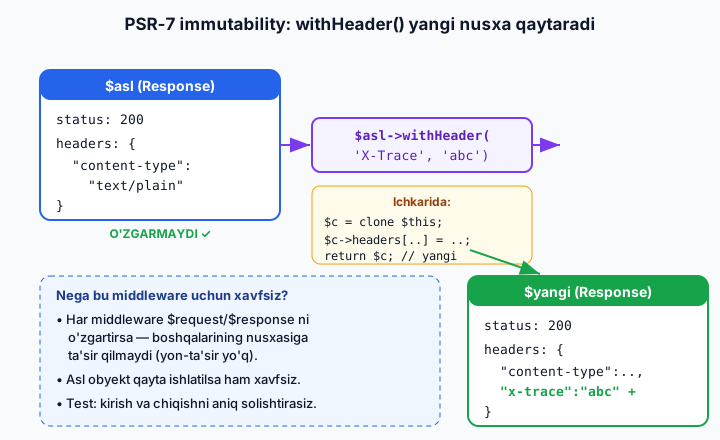
Diqqat: har bir withX metodi clone $this qiladi, nusxani o'zgartiradi va nusxani qaytaradi. Asl obyekt hech qachon o'zgarmaydi. Buni qaytaruv tipi static (PHP 8 dan $this ni qaytaruvchi metodlar uchun) ham ifoda etadi: meros bo'lganda ham aniq sinf nusxasi qaytadi.
Eslatma —
getHeaderLinedastrtolower. HTTP sarlavhalari nomi harf registriga sezgir emas:Content-Typevacontent-type— bir narsa. Shuning uchun ichkarida kalitlarni doim kichik harfga keltirib saqlaymiz (haqiqiy PSR-7 esa asl yozuvni ham eslab qoladi, biz soddalashtirdik).
Immutability ni jonli isbotlaymiz
Endi yuqoridagi Response ni ishlatib, immutability haqiqatan ham ishlashini ko'ramiz. Quyidagi to'liq fayl yuqoridagi sinflarni o'z ichiga oladi (qisqalik uchun sinflar takrorlanmaydi — amalda ularni shu fayl boshiga qo'ying yoki require qiling):
<?php
declare(strict_types=1);
// ... yuqoridagi StreamInterface, MessageInterface, ResponseInterface,
//     StringStream, Response sinflari shu yerda turibdi ...

// === IMMUTABILITY ISBOTI ===
$asl = new Response(200, ['content-type' => 'text/plain']);
$yangi = $asl
    ->withStatus(404, 'Not Found')
    ->withHeader('X-Powered-By', 'Mini-FW')
    ->withBody(new StringStream('Topilmadi'));

echo "ASL status      : {$asl->getStatusCode()} {$asl->getReasonPhrase()}\n";
echo "ASL X-Powered-By: '" . $asl->getHeaderLine('X-Powered-By') . "'\n";
echo "ASL body        : '" . (string)$asl->getBody() . "'\n";
echo "---\n";
echo "YANGI status      : {$yangi->getStatusCode()} {$yangi->getReasonPhrase()}\n";
echo "YANGI X-Powered-By: '" . $yangi->getHeaderLine('X-Powered-By') . "'\n";
echo "YANGI body        : '" . (string)$yangi->getBody() . "'\n";
echo "---\n";
echo "Boshqa obyektmi? " . ($asl !== $yangi ? 'ha' : "yo'q") . "\n";
Ishga tushiramiz (in-process, jonli server kerak emas) va chiqishni ko'ramiz:
ASL status      : 200 OK
ASL X-Powered-By: ''
ASL body        : ''
---
YANGI status      : 404 Not Found
YANGI X-Powered-By: 'Mini-FW'
YANGI body        : 'Topilmadi'
---
Boshqa obyektmi? ha
Mana isbot: $asl ga withStatus/withHeader/withBody zanjirini qo'llaganimizdan keyin ham $asl butunlay o'zgarmadi — status hali ham 200, X-Powered-By bo'sh, tana bo'sh. Barcha o'zgarishlar $yangi ga ketdi. Va $asl !== $yangi — bular ikki xil obyekt.
Nega immutability middleware uchun hayotiy
Bu xususiyat oddiy ko'rinadi, lekin u butun middleware pipeline (keyingi, 12-bob) ni xavfsiz qiladi. Tasavvur qiling, so'rov ketma-ket bir nechta middleware dan o'tadi: autentifikatsiya, jurnal, CORS. Agar so'rov obyekti o'zgaruvchan (mutable) bo'lsa:
- Bir middleware sarlavhani o'zgartirsa, avvalgi middleware ko'rgan obyekt ham jimgina o'zgaradi — kutilmagan yon-ta'sir.
- So'rovni ikki marta ishlatsangiz (masalan, qayta urinish), birinchi marta qo'shilgan "axlat" ikkinchisiga ta'sir qiladi.
- Konkurent (bir vaqtda bir nechta so'rovni qayta ishlatuvchi) muhitda — poyga holati (race condition).
Immutable bo'lsa, har bir withX yangi nusxa qaytarganligi sababli, har bir middleware o'z nusxasi bilan ishlaydi. Asl obyekt har doim "toza" qoladi. Pipeline shunday yoziladi: $response = $next($request->withAttribute('user', $u)); — bu yerda $next ga yangi so'rov boradi, lekin joriy middleware ning $request i o'zgarmaydi. Bu — funksional dasturlashning "o'zgarmas ma'lumot" tamoyilining HTTP ga tatbiqi.
Globaldan ServerRequest qurish
Endi I/O chegarasini yozamiz: superglobal'lardan (bu yerda — ularni simulyatsiya qiluvchi massivlardan) ServerRequest obyektini quramiz. Bu kodning go'zalligi shundaki, jonli server kerak emas — biz $_SERVER/$_GET/php://input qiymatlarini o'zimiz beramiz va natijani tekshiramiz. Aynan shu narsa testni mumkin qiladi:
<?php
declare(strict_types=1);

// Minimal UriInterface + ServerRequestInterface (o'quv uchun)
interface UriInterface
{
    public function getScheme(): string;
    public function getHost(): string;
    public function getPath(): string;
    public function getQuery(): string;
    public function __toString(): string;
}

interface RequestInterface
{
    public function getMethod(): string;
    public function getUri(): UriInterface;
    public function getHeaderLine(string $name): string;
}

interface ServerRequestInterface extends RequestInterface
{
    public function getQueryParams(): array;
    public function getParsedBody(): null|array|object;
    public function getServerParams(): array;
    public function getAttribute(string $name, mixed $default = null): mixed;
    public function withAttribute(string $name, mixed $value): static;
}

final class Uri implements UriInterface
{
    public function __construct(
        private string $scheme = 'http',
        private string $host = 'localhost',
        private string $path = '/',
        private string $query = '',
    ) {}
    public function getScheme(): string { return $this->scheme; }
    public function getHost(): string { return $this->host; }
    public function getPath(): string { return $this->path; }
    public function getQuery(): string { return $this->query; }
    public function __toString(): string
    {
        $q = $this->query !== '' ? '?' . $this->query : '';
        return "{$this->scheme}://{$this->host}{$this->path}{$q}";
    }
}

final class ServerRequest implements ServerRequestInterface
{
    public function __construct(
        private string $method,
        private UriInterface $uri,
        private array $headers = [],
        private array $query = [],
        private null|array|object $parsedBody = null,
        private array $serverParams = [],
        private array $attributes = [],
    ) {}

    public function getMethod(): string { return $this->method; }
    public function getUri(): UriInterface { return $this->uri; }
    public function getHeaderLine(string $name): string { return $this->headers[strtolower($name)] ?? ''; }
    public function getQueryParams(): array { return $this->query; }
    public function getParsedBody(): null|array|object { return $this->parsedBody; }
    public function getServerParams(): array { return $this->serverParams; }
    public function getAttribute(string $name, mixed $default = null): mixed
    {
        return $this->attributes[$name] ?? $default;
    }
    public function withAttribute(string $name, mixed $value): static
    {
        $clone = clone $this;
        $clone->attributes[$name] = $value;
        return $clone;
    }
}

// === I/O CHEGARASI: superglobal'lardan ServerRequest qurish ===
// Bu yagona joy — bu yerdan keyin ichkarida hammasi obyekt.
function serverRequestFromGlobals(array $server, array $get, ?string $rawBody): ServerRequest
{
    $method = $server['REQUEST_METHOD'] ?? 'GET';
    $uriStr = $server['REQUEST_URI'] ?? '/';
    $path   = parse_url($uriStr, PHP_URL_PATH) ?? '/';
    $query  = $server['QUERY_STRING'] ?? '';

    // Sarlavhalarni $_SERVER dagi HTTP_ prefiksidan yig'amiz
    $headers = [];
    foreach ($server as $key => $value) {
        if (str_starts_with($key, 'HTTP_')) {
            $name = strtolower(str_replace('_', '-', substr($key, 5)));
            $headers[$name] = $value;
        }
    }

    // Tanani Content-Type ga qarab parslaymiz (php://input simulyatsiyasi: $rawBody)
    $parsedBody = null;
    $contentType = $headers['content-type'] ?? '';
    if ($rawBody !== null && str_contains($contentType, 'application/json')) {
        $parsedBody = json_decode($rawBody, true);
    }

    return new ServerRequest(
        method: $method,
        uri: new Uri('http', $server['HTTP_HOST'] ?? 'localhost', $path, $query),
        headers: $headers,
        query: $get,
        parsedBody: $parsedBody,
        serverParams: $server,
    );
}

// === SIMULYATSIYA: jonli server SHART EMAS — globaldagi qiymatlarni o'zimiz beramiz ===
$server = [
    'REQUEST_METHOD' => 'POST',
    'REQUEST_URI'    => '/api/users?role=admin',
    'QUERY_STRING'   => 'role=admin',
    'HTTP_HOST'      => 'api.example.uz',
    'HTTP_CONTENT_TYPE' => 'application/json',
    'HTTP_ACCEPT'    => 'application/json',
];
$get  = ['role' => 'admin'];
$rawBody = '{"name":"Oqil","age":30}';   // php://input o'rniga

$request = serverRequestFromGlobals($server, $get, $rawBody);

echo "Metod      : " . $request->getMethod() . "\n";
echo "URI        : " . (string)$request->getUri() . "\n";
echo "Path       : " . $request->getUri()->getPath() . "\n";
echo "Query[role]: " . ($request->getQueryParams()['role'] ?? '-') . "\n";
echo "Accept     : " . $request->getHeaderLine('Accept') . "\n";
echo "Body name  : " . ($request->getParsedBody()['name'] ?? '-') . "\n";

// Attribut qo'shish (router odatda shu yerga ma'lumot joylaydi) — immutable
$withUser = $request->withAttribute('userId', 42);
echo "Asl userId : " . var_export($request->getAttribute('userId'), true) . "\n";
echo "Yangi userId: " . $withUser->getAttribute('userId') . "\n";
Ishga tushirsak:
Metod      : POST
URI        : http://api.example.uz/api/users?role=admin
Path       : /api/users
Query[role]: admin
Accept     : application/json
Body name  : Oqil
Asl userId : NULL
Yangi userId: 42
E'tibor bering: haqiqiy server ishlamadi, lekin biz to'liq so'rovni "qo'lda" yasab, har bir qismini o'qib chiqdik. Aynan shu testlash uslubidir. Yana bir muhim joy: withAttribute('userId', 42) chaqirgandan keyin asl $request ning userId si hali ham NULL — chunki ServerRequest ham immutable. Atributlar — bu router/middleware so'rovga "biriktiradigan" ma'lumot (masalan, autentifikatsiyalangan foydalanuvchi yoki URL dan ajratilgan parametr).
parsedBodynima uchunphp://inputdan? JSON API da klient tananiapplication/jsonsifatida yuboradi. Bunday tana$_POSTga tushmaydi — PHP faqat forma kodlashlarini avtomatik parslaydi. Shuning uchun JSON nifile_get_contents('php://input')bilan o'qib,json_decodeqilasiz. Yuqorida$rawBodyaynan shu xom tanani simulyatsiya qiladi.
PSR-17: factory'lar
PSR-7 — bu interfeyslar to'plami. Lekin obyektni kim yaratadi? Agar kodingiz new Nyholm\Psr7\Response() deb yozsa, u konkret paketga bog'lanib qoladi — boshqa PSR-7 implementatsiyasiga o'tolmaysiz. Aynan shu "yaratish" bog'liqligini uzish uchun PSR-17 (psr/http-factory) keladi: u factory interfeyslarini belgilaydi.
| Factory interfeysi | Nima yaratadi |
|---|---|
RequestFactoryInterface |
RequestInterface (createRequest) |
ResponseFactoryInterface |
ResponseInterface (createResponse) |
ServerRequestFactoryInterface |
ServerRequestInterface (createServerRequest) |
StreamFactoryInterface |
StreamInterface (createStream, createStreamFromFile) |
UriFactoryInterface |
UriInterface (createUri) |
UploadedFileFactoryInterface |
UploadedFileInterface |
Endi sizning kodingiz konkret sinfga emas, ResponseFactoryInterface ga bog'lanadi. Qaysi paket ishlatilishini — konteyner (DI) hal qiladi. Bu — yana o'sha 10-bobdagi "kontraktga dasturlang, implementatsiyaga emas" tamoyili.
Haqiqiy paket bilan: nyholm/psr7
O'z minimal versiyamizni tushunganimizdan keyin, endi production-darajadagi paketni ishlatamiz. nyholm/psr7 — eng yengil va keng tarqalgan PSR-7/PSR-17 implementatsiyasi. Composer bilan o'rnatamiz:
Bu paket o'zi bilan birga psr/http-message (PSR-7 interfeyslari) va psr/http-factory (PSR-17 interfeyslari) ni ham tortib keladi. Nyholm\Psr7\Factory\Psr17Factory — bir sinfning o'zi barcha factory interfeyslarini amalga oshiradi (Response, Request, Stream, Uri, ...). Quyidagi to'liq fayl — composer require dan keyin haqiqatan ishga tushadi:
<?php
declare(strict_types=1);

require __DIR__ . '/vendor/autoload.php';

use Nyholm\Psr7\Factory\Psr17Factory;
use Psr\Http\Message\ResponseInterface;
use Psr\Http\Message\ServerRequestInterface;

// === PSR-17: factory'lar barcha PSR-7 obyektlarini yaratadi ===
// Psr17Factory bir vaqtning o'zida Request/Response/Stream/Uri/UploadedFile factory.
$factory = new Psr17Factory();

// 1) Response yaratish va withX bilan zanjirlash (immutable)
$response = $factory->createResponse(200)
    ->withHeader('Content-Type', 'application/json')
    ->withHeader('X-Powered-By', 'Mini-FW');

$response->getBody()->write(json_encode(['ok' => true, 'name' => 'Oqil']));

echo "Status     : " . $response->getStatusCode() . " " . $response->getReasonPhrase() . "\n";
echo "Content-Type: " . $response->getHeaderLine('Content-Type') . "\n";
echo "Body       : " . (string)$response->getBody() . "\n";

// 2) Immutability: withStatus asl obyektni o'zgartirmaydi
$xato = $response->withStatus(500, 'Internal Server Error');
echo "Asl status  : " . $response->getStatusCode() . "\n";   // 200
echo "Yangi status: " . $xato->getStatusCode() . "\n";        // 500
echo "Boshqa obyektmi? " . ($response !== $xato ? 'ha' : "yo'q") . "\n";

// 3) ServerRequest yaratish + attribut
$request = $factory->createServerRequest('POST', 'https://api.example.uz/users')
    ->withHeader('Accept', 'application/json')
    ->withAttribute('userId', 42);

echo "---\n";
echo "Req metod : " . $request->getMethod() . "\n";
echo "Req host  : " . $request->getUri()->getHost() . "\n";
echo "Req attr  : " . $request->getAttribute('userId') . "\n";

// Tip tekshiruv: bular haqiqiy PSR interfeyslari
echo "Response PSR-7? " . ($response instanceof ResponseInterface ? 'ha' : "yo'q") . "\n";
echo "Request  PSR-7? " . ($request instanceof ServerRequestInterface ? 'ha' : "yo'q") . "\n";
Chiqish:
Status     : 200 OK
Content-Type: application/json
Body       : {"ok":true,"name":"Oqil"}
Asl status  : 200
Yangi status: 500
Boshqa obyektmi? ha
---
Req metod : POST
Req host  : api.example.uz
Req attr  : 42
Response PSR-7? ha
Request  PSR-7? ha
Diqqat qiling: bizning minimal Response imiz ham, nyholm/psr7 ning Response i ham bir xil tarzda ishlaydi — withStatus aslni o'zgartirmaydi, $response !== $xato. Bu — PSR-7 ning standartligi: implementatsiya almashsa ham, xulq-atvor bir xil. Va $response instanceof ResponseInterface — true, ya'ni nyholm obyekti haqiqiy PSR-7 kontraktiga mos.
Tana — oqim, shuning uchun
->getBody()->write(...). PSR-7 da tanaStreamInterface. Yangi Response ning tanasi bo'sh, yozish uchungetBody()->write()ishlatamiz. Bu yagona joy bo'lib, "immutable bo'lmagandek" ko'rinadi — chunki oqimning o'zi holatga ega (kursor). AslidaResponseobyektining sarlavha/status holati immutable; faqat oqim ichiga yozish texnik sabablarga ko'ra mutable. Toza immutable xulq uchun ko'pinchawithBody(new Stream(...))afzal ko'riladi.
Hammasini birga: (Request) -> Response yadrosi
Endi butun g'oyani bitta amaliy misolda bog'laymiz. Framework ning yuragi — bu sof funksiya: ServerRequestInterface qabul qiladi, ResponseInterface qaytaradi. Bu yadro HTTP "tashqi dunyosi" haqida hech narsa bilmaydi — shuning uchun to'liq test qilinadi. Quyidagi kod nyholm/psr7 bilan ishlaydi:
<?php
declare(strict_types=1);

require __DIR__ . '/vendor/autoload.php';

use Nyholm\Psr7\Factory\Psr17Factory;
use Psr\Http\Message\ResponseInterface;
use Psr\Http\Message\ServerRequestInterface;

$factory = new Psr17Factory();

// === Mini "ilova": faqat (Request) -> Response funksiyasi ===
// HTTP haqida hech narsa bilmaydigan, sof, test qilinadigan yadro.
$app = function (ServerRequestInterface $req) use ($factory): ResponseInterface {
    $name = $req->getQueryParams()['name'] ?? 'mehmon';
    $payload = json_encode(['salom' => $name, 'metod' => $req->getMethod()]);

    $res = $factory->createResponse(200)->withHeader('Content-Type', 'application/json');
    $res->getBody()->write($payload);
    return $res;
};

// === IN-PROCESS TEST: jonli server kerak emas ===
// Soxta so'rov quramiz, app dan o'tkazamiz, Response ni tasdiqlaymiz.
$req = $factory->createServerRequest('GET', 'https://x.uz/?name=Oqil');
$res = $app($req);

assert($res->getStatusCode() === 200);
assert($res->getHeaderLine('Content-Type') === 'application/json');
$data = json_decode((string)$res->getBody(), true);
assert($data['salom'] === 'Oqil');
assert($data['metod'] === 'GET');

echo "Test o'tdi. Status=" . $res->getStatusCode() . " Body=" . (string)$res->getBody() . "\n";

// === jsonResponse yordamchisi (immutable zanjir) — keng ishlatiladigan andoza ===
function jsonResponse(Psr17Factory $f, mixed $data, int $status = 200): ResponseInterface
{
    $res = $f->createResponse($status)
        ->withHeader('Content-Type', 'application/json; charset=utf-8')
        ->withHeader('Cache-Control', 'no-store');
    $res->getBody()->write(json_encode($data, JSON_UNESCAPED_UNICODE));
    return $res;
}

$r = jsonResponse($factory, ['xato' => 'Topilmadi'], 404);
echo "jsonResponse: " . $r->getStatusCode() . " | " . $r->getHeaderLine('Content-Type') . " | " . (string)$r->getBody() . "\n";
Chiqish:
Test o'tdi. Status=200 Body={"salom":"Oqil","metod":"GET"}
jsonResponse: 404 | application/json; charset=utf-8 | {"xato":"Topilmadi"}
E'tibor bering: biz so'rovni kodda yasadik, $app ga uzatdik, javobni assert bilan tekshirdik — to'liq avtotest, jonli serversiz. Aynan shu naqsh PHPUnit funksional testlarining poydevoridir. Bu $app keyingi 12-bobda middleware pipeline va router bilan o'raladi, lekin uning kontrakti — (Request) -> Response — o'zgarmaydi.
Xulosa va keyingisi
Bu bobda framework internals (Wave 3) ning birinchi g'ishtini qo'ydik:
- HTTP xabari (so'rov/javob) bir xil skeletga ega: start/status qatori, sarlavhalar, tana — PSR-7 da
MessageInterfaceumumiy poydevor. - Superglobal'lar (
$_GET/$_POST/$_SERVER/php://input) faqat I/O chegarasida ishlatilishi kerak; ichkarida hamma narsa obyekt — bu test, qayta ishlatish va oshkor bog'liqlik uchun zarur. - PSR-7 beshta interfeys (
MessageInterface,ServerRequestInterface,ResponseInterface,UriInterface,StreamInterface) bilan HTTP ni standartlashtiradi. - Immutability:
withHeader/withStatus/withBodyaslni o'zgartirmasdan yangi nusxa qaytaradi (clone $this). Bu — middleware pipeline ni yon-ta'sirlardan himoya qiladigan asosiy mexanizm. - PSR-17 factory'lar obyekt yaratishni ham kontraktga bog'laydi (
createResponse,createServerRequest), shu bois konkret paketni (nyholm/psr7) almashtirish oson. - Framework yadrosi — sof
(Request) -> Responsefunksiya; uni jonli serversiz, in-process tarzda to'liq test qilish mumkin.
Keyingisi — 12-bob: PSR-15 middleware pipeline. Shu bobda yasagan Request/Response obyektlari ustiga middleware zanjirini quramiz: MiddlewareInterface va RequestHandlerInterface kontraktlari, "piyoz qatlamlari" modeli, va nima uchun aynan immutability bu pipeline ni xavfsiz qilishini ko'ramiz.
Mashqlar
Oson
- Yuqoridagi minimal
Responsesinfini olib,withHeader('X-A', '1')->withHeader('X-B', '2')zanjirini qo'llang. Asl obyektdagetHeaderLine('X-A')nima qaytaradi va nima uchun? getHeaderLinemetodida sarlavha nomi nima uchunstrtolowerqilinadi?Content-Typevacontent-typebilan tekshirib ko'rsating.nyholm/psr7ni o'rnatib,createResponse(404)yarating va uninggetReasonPhrase()nima qaytarishini chop eting (siz sabab iborasini bermadingiz).
O'rta
serverRequestFromGlobalsfunksiyasini kengaytiring: agarContent-Typeapplication/x-www-form-urlencodedbo'lsa,$rawBodyniparse_strbilan parslabparsedBodyga joylang. JSON va forma ikkala holatni ham bitta so'rov bilan test qiling.jsonResponseyordamchisiga o'xshashredirectResponse(Psr17Factory $f, string $url): ResponseInterfaceyozing — u302status vaLocationsarlavhasini immutable tarzda qaytarsin. Test bilan tasdiqlang.- Immutability ni "buzadigan" noto'g'ri
withHeaderni yozing (clonesiz, to'g'ridan-to'g'ri$this->headers[...] = ...; return $this;) va asl obyekt qanday "ifloslanishini" ko'rsating. Keyin to'g'ri versiyani qaytaring.
Qiyin
- Minimal
ServerRequestvaResponseustiga juda kichik middleware mexanizmini yozing:addHeaderMiddleware($next)ko'rinishida — u so'rovni$nextga uzatadi, qaytgan javobgaX-Tracesarlavhasini immutable qo'shadi. Ikki middleware ni zanjirlab, asl javob o'zgarmaganini va yakuniy javobda ikkala sarlavha borligini in-process test bilan isbotlang. (Bu — 12-bobning oldindan ko'rinishi.)
Yechim — 1
Asl obyektda getHeaderLine('X-A') bo'sh satr ('') qaytaradi. Sababi: withHeader har safar clone $this qilib yangi obyekt qaytaradi — sarlavha faqat o'sha yangi nusxaga qo'shiladi. Asl Response hech qachon o'zgarmaydi (immutability). Sarlavhalar faqat zanjir oxiridagi obyektda jamlanadi; agar natijani o'zgaruvchiga saqlamasangiz, ular "yo'qoladi".
Yechim — 2
HTTP standarti (RFC 7230) bo'yicha sarlavha nomlari registriga sezgir emas — Content-Type, content-type, CONTENT-TYPE bir xil sarlavha. Agar kalitlarni asl ko'rinishda saqlasak, getHeaderLine('content-type') Content-Type bilan saqlanganini topa olmaydi. Shuning uchun saqlashda ham, qidirishda ham strtolower qilamiz:
Yechim — 3
<?php
declare(strict_types=1);
require __DIR__ . '/vendor/autoload.php';
use Nyholm\Psr7\Factory\Psr17Factory;

$f = new Psr17Factory();
$res = $f->createResponse(404);
echo $res->getStatusCode() . " " . $res->getReasonPhrase() . "\n";  // 404 Not Found
Sabab iborasini bermaganimizga qaramay, nyholm/psr7 standart status kodlari uchun standart sabab iborasini avtomatik qo'yadi — 404 uchun Not Found. Bu IANA HTTP status kodlari ro'yxatidan keladi.
Yechim — 4
<?php
declare(strict_types=1);
// (yuqoridagi Uri, ServerRequest, ServerRequestInterface sinflari shu yerda)

function serverRequestFromGlobals(array $server, array $get, ?string $rawBody): ServerRequest
{
    $method = $server['REQUEST_METHOD'] ?? 'GET';
    $path   = parse_url($server['REQUEST_URI'] ?? '/', PHP_URL_PATH) ?? '/';

    $headers = [];
    foreach ($server as $key => $value) {
        if (str_starts_with($key, 'HTTP_')) {
            $headers[strtolower(str_replace('_', '-', substr($key, 5)))] = $value;
        }
    }

    $parsedBody = null;
    $ct = $headers['content-type'] ?? '';
    if ($rawBody !== null && str_contains($ct, 'application/json')) {
        $parsedBody = json_decode($rawBody, true);
    } elseif ($rawBody !== null && str_contains($ct, 'application/x-www-form-urlencoded')) {
        parse_str($rawBody, $parsedBody);     // forma -> massiv
    }

    return new ServerRequest($method, new Uri('http', $server['HTTP_HOST'] ?? 'localhost', $path),
        $headers, $get, $parsedBody, $server);
}

// JSON test
$j = serverRequestFromGlobals(
    ['REQUEST_METHOD' => 'POST', 'REQUEST_URI' => '/x', 'HTTP_CONTENT_TYPE' => 'application/json'],
    [], '{"a":1}'
);
echo "JSON a = " . $j->getParsedBody()['a'] . "\n";          // 1

// Forma test
$frm = serverRequestFromGlobals(
    ['REQUEST_METHOD' => 'POST', 'REQUEST_URI' => '/x', 'HTTP_CONTENT_TYPE' => 'application/x-www-form-urlencoded'],
    [], 'name=Oqil&age=30'
);
echo "Forma name = " . $frm->getParsedBody()['name'] . "\n"; // Oqil
Content-Type ga qarab to'g'ri parser tanlanadi: JSON uchun json_decode, forma uchun parse_str. Bu — har bir framework ning so'rov tanasini "qabul qilish" mantig'ining soddalashtirilgan ko'rinishi.
Yechim — 5
<?php
declare(strict_types=1);
require __DIR__ . '/vendor/autoload.php';
use Nyholm\Psr7\Factory\Psr17Factory;
use Psr\Http\Message\ResponseInterface;

function redirectResponse(Psr17Factory $f, string $url): ResponseInterface
{
    return $f->createResponse(302)         // har withX yangi nusxa qaytaradi
        ->withHeader('Location', $url)
        ->withHeader('Cache-Control', 'no-store');
}

$f = new Psr17Factory();
$res = $redirect = redirectResponse($f, '/login');

assert($res->getStatusCode() === 302);
assert($res->getHeaderLine('Location') === '/login');
echo "Redirect OK: " . $res->getStatusCode() . " -> " . $res->getHeaderLine('Location') . "\n";
// Redirect OK: 302 -> /login
createResponse(302) boshlang'ich javobni beradi; har bir withHeader yangi nusxa qaytargani uchun, yakuniy $res ikkala sarlavhaga ham ega. Hech qaysi oraliq obyekt o'zgartirilmadi.
Yechim — 6
<?php
declare(strict_types=1);
// (yuqoridagi StringStream, StreamInterface, MessageInterface, ResponseInterface)

final class YomonResponse extends Response   // yoki Response ni nusxalab o'zgartiring
{
    // ❌ NOTO'G'RI: clone yo'q, asl obyektni o'zgartiradi
    public function withHeaderYomon(string $name, string $value): static
    {
        $this->headers[strtolower($name)] = $value;   // ❌ aslni iflosladi
        return $this;                                  // ❌ o'zini qaytardi
    }
}
Eslatma: yuqoridagi Response::$headers private bo'lgani uchun amalda bu meros ishlamaydi — bu ataylab noto'g'ri kontseptual misol. To'g'ri yondashuv — private xususiyatlar va clone $this. Mantiqiy isbot:
<?php
declare(strict_types=1);
// Soddalashtirilgan, public xususiyatli namoyish (faqat g'oyani ko'rsatish uchun)
final class Demo {
    public array $headers = [];
    // ❌ yomon
    public function yomon(string $k, string $v): static { $this->headers[$k] = $v; return $this; }
    // ✅ yaxshi
    public function yaxshi(string $k, string $v): static { $c = clone $this; $c->headers[$k] = $v; return $c; }
}

$asl = new Demo();
$x = $asl->yomon('A', '1');
echo "Yomon: asl[A] = " . ($asl->headers['A'] ?? 'yo\'q') . "\n";  // 1 — asl ifloslandi! ($asl === $x)

$asl2 = new Demo();
$y = $asl2->yaxshi('B', '2');
echo "Yaxshi: asl[B] = " . ($asl2->headers['B'] ?? 'yo\'q') . "\n"; // yo'q — asl toza ($asl2 !== $y)
Chiqish:
yomon() da asl obyekt o'zgardi ($asl === $x), yaxshi() da esa asl toza qoldi ($asl2 !== $y). Aynan shu farq — immutability ning butun qiymati. To'g'ri versiya — har doim clone $this.
Yechim — 7
Bu — keyingi bobning "yadrosi". Middleware — bu (Request, $next) -> Response ko'rinishidagi qatlam. nyholm/psr7 bilan to'liq, ishlaydigan misol:
<?php
declare(strict_types=1);

require __DIR__ . '/vendor/autoload.php';

use Nyholm\Psr7\Factory\Psr17Factory;
use Psr\Http\Message\ResponseInterface;
use Psr\Http\Message\ServerRequestInterface;

$factory = new Psr17Factory();

// Yakuniy handler: oddiy javob qaytaradi
$handler = function (ServerRequestInterface $req) use ($factory): ResponseInterface {
    $res = $factory->createResponse(200)->withHeader('Content-Type', 'text/plain');
    $res->getBody()->write('Salom');
    return $res;
};

// Middleware fabrikasi: javobga immutable tarzda sarlavha qo'shadi
function addHeaderMiddleware(string $name, string $value, callable $next): callable
{
    return function (ServerRequestInterface $req) use ($name, $value, $next): ResponseInterface {
        $res = $next($req);                       // ichki qatlamni chaqir
        return $res->withHeader($name, $value);   // YANGI nusxa qaytar (immutable)
    };
}

// Zanjir: A -> B -> handler ("piyoz qatlamlari")
$pipeline = addHeaderMiddleware('X-Trace', 'abc',
              addHeaderMiddleware('X-Powered-By', 'Mini-FW', $handler));

// IN-PROCESS TEST
$req = $factory->createServerRequest('GET', 'https://x.uz/');
$final = $pipeline($req);

// 1) Yakuniy javobda ikkala sarlavha bor
assert($final->getHeaderLine('X-Trace') === 'abc');
assert($final->getHeaderLine('X-Powered-By') === 'Mini-FW');

// 2) handler bergan asl javob o'zgarmagan (immutability isboti)
$asl = $handler($req);
assert($asl->getHeaderLine('X-Trace') === '');        // asl toza
assert($asl->getHeaderLine('X-Powered-By') === '');   // asl toza

echo "Yakuniy: X-Trace=" . $final->getHeaderLine('X-Trace')
   . ", X-Powered-By=" . $final->getHeaderLine('X-Powered-By')
   . ", Body=" . (string)$final->getBody() . "\n";
echo "Asl javob toza? " . ($asl->getHeaderLine('X-Trace') === '' ? 'ha' : "yo'q") . "\n";
echo "Hammasi o'tdi.\n";
Chiqish:
Tushuntirish: har bir middleware $next($req) orqali ichki qatlamga o'tadi, qaytgan javobga withHeader bilan yangi sarlavha qo'shadi. Immutability tufayli handler qaytargan asl javob hech qachon "ifloslanmaydi" — addHeaderMiddleware har safar yangi nusxa yasaydi. Shuning uchun bir xil handler ni qayta ishlatsangiz ham, oldingi qatlamlar qo'shgan sarlavhalar unga "yopishib" qolmaydi. Aynan shu — 12-bobdagi PSR-15 pipeline ning poydevori; u yerda callable o'rniga rasmiy MiddlewareInterface va RequestHandlerInterface kontraktlarini ishlatamiz.
⬅️ Oldingi: 10 — PSR standartlari va PHP-FIG · 🏠 README · Keyingi: 12 — PSR-15 middleware pipeline ➡️