06 — Pinia (State Management)
⬅️ Oldingi: 05 — Vue Router · 🏠 README · Keyingi: 07 — Nuxt asoslari ➡️
ref/composable lokal holat uchun yetadi. Lekin butun ilova bo'ylab baham ko'riladigan holat (joriy foydalanuvchi, savat, til, EduCore'da joriy tenant) kerak bo'lsa — Pinia.
Pinia — Vue'ning rasmiy state-management kutubxonasi (Vuex'ning vorisi). Soddaroq, TypeScript-do'st, DevTools bilan zo'r.
Laravel analogiyasi: Pinia store — singleton service. Bir marta yaratiladi, butun ilova bir xil instansiyani ishlatadi. State — service property'lari, getters — accessor'lar, actions — service metodlari (biznes-logika shu yerda).
Qachon Pinia, qachon yo'q?
| Holat | Yechim |
|---|---|
| Bitta komponentga tegishli | lokal ref |
| Bir necha qo'shni komponent | props/emit yoki composable |
| Daraxtning ma'lum shoxi | provide/inject |
| Butun ilova, ko'p joydan o'qiladi/yoziladi | Pinia |
Hamma narsani store'ga tiqishtirma. Pinia — global holat uchun. Lokal narsa lokal qolsin.
6.1 O'rnatish
// main.js
import { createApp } from 'vue'
import { createPinia } from 'pinia'
import App from './App.vue'

createApp(App).use(createPinia()).mount('#app')
Nuxt'da:
npm i @pinia/nuxt, keyinnuxt.configmodules'ga qo'shasan —createPiniaqo'lda kerak emas (07-modul).
6.2 Store yaratish — Setup syntax (tavsiya)
Composition API uslubi — eng moslashuvchan, <script setup> ga o'xshaydi:
// stores/counter.js
import { defineStore } from 'pinia'
import { ref, computed } from 'vue'

export const useCounterStore = defineStore('counter', () => {
  // STATE → ref
  const count = ref(0)
  const history = ref([])

  // GETTERS → computed
  const double = computed(() => count.value * 2)
  const isEven = computed(() => count.value % 2 === 0)

  // ACTIONS → funksiyalar (sync yoki async)
  function increment() {
    count.value++
    history.value.push(count.value)
  }
  async function fetchInitial() {
    const res = await fetch('/api/counter')
    count.value = (await res.json()).value
  }

  return { count, history, double, isEven, increment, fetchInitial }
})
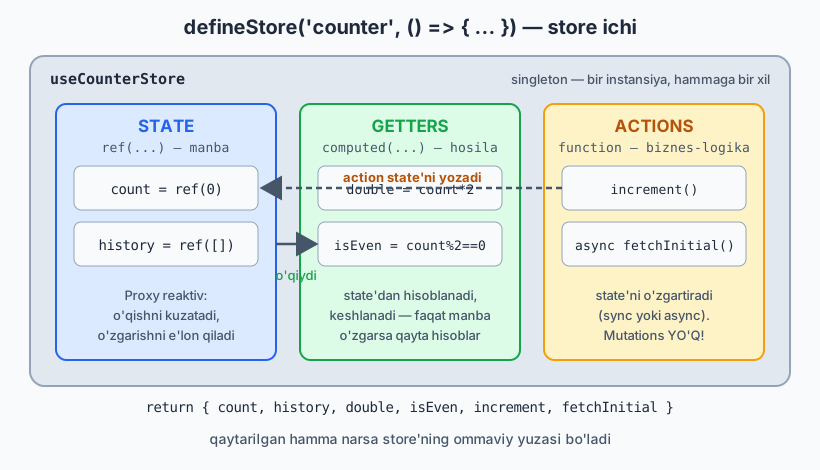
Moslik:
- ref = state
- computed = getter
- function = action
Quyidagi diagramma store'ning uch qismi (state / getters / actions) o'zaro qanday bog'lanishini ko'rsatadi:
<script setup>
import { useCounterStore } from '@/stores/counter'
const counter = useCounterStore()
</script>

<template>
  <p>{{ counter.count }} (x2 = {{ counter.double }})</p>
  <button @click="counter.increment()">+</button>
</template>
Option syntax (Vuex'ga o'xshash, alternativa)
export const useCounterStore = defineStore('counter', {
  state: () => ({ count: 0 }),
  getters: {
    double: (state) => state.count * 2,
  },
  actions: {
    increment() { this.count++ },          // this — store
    async fetchInitial() { /* await ... */ },
  },
})
Ikkalasi ham ishlaydi. Setup syntax zamonaviyroq va composable'lar bilan yaxshiroq birikadi. Bu qo'llanmada uni ishlatamiz.
6.3 Store'dan foydalanish — destructure tuzog'i
<script setup>
import { storeToRefs } from 'pinia'
import { useCounterStore } from '@/stores/counter'

const counter = useCounterStore()

// ❌ XATO — reaktivlikni uzadi
const { count, double } = counter

// ✅ State/getters uchun storeToRefs
const { count, double } = storeToRefs(counter)

// ✅ Actions'ni to'g'ridan-to'g'ri destructure qilsa bo'ladi (ular funksiya, reaktiv emas)
const { increment } = counter
</script>
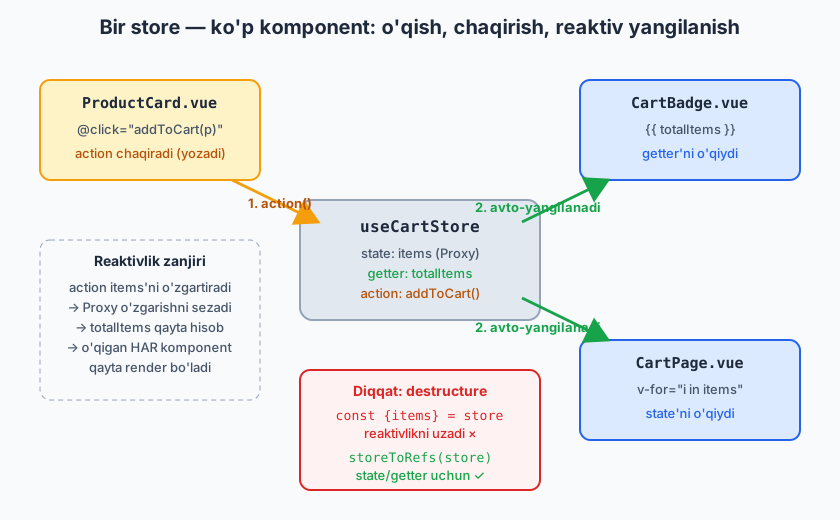
Nega? Store — reactive obyekt (02-modul!). Uni to'g'ridan-to'g'ri destructure qilsang, reaktivlik uziladi. storeToRefs state va getter'larni reaktiv ref'larga o'raydi. Actions esa shunchaki funksiya — to'g'ridan-to'g'ri olsa bo'ladi.
Quyidagi diagramma bitta store'ni ko'p komponent qanday baham ko'rishini ko'rsatadi: biri action chaqirib state'ni o'zgartiradi, qolganlari esa Proxy reaktivligi tufayli avtomatik yangilanadi:
6.4 State'ni o'zgartirish usullari
const store = useCounterStore()

// 1) action orqali (TAVSIYA — logika bir joyda, DevTools'da kuzatiladi)
store.increment()

// 2) to'g'ridan-to'g'ri (mumkin, lekin oddiy holatlar uchun)
store.count++

// 3) $patch — bir nechta o'zgarishni birga (bitta yangilanish)
store.$patch({ count: 10, name: 'x' })
store.$patch((state) => {              // murakkab (massivga push va h.k.)
  state.items.push(newItem)
  state.count++
})

// 4) $reset — boshlang'ich holatga (faqat Option syntax'da avtomatik;
//    Setup syntax'da o'zing reset action yozasan)
Vuex'dan farqli: Pinia'da mutations yo'q. To'g'ridan-to'g'ri o'zgartirish yoki action. Bu — kamroq boilerplate.
6.5 Store'lar bir-birini ishlatishi
// stores/cart.js
import { defineStore } from 'pinia'
import { ref, computed } from 'vue'
import { useAuthStore } from './auth'

export const useCartStore = defineStore('cart', () => {
  const auth = useAuthStore()          // boshqa store'ni chaqir
  const items = ref([])

  const canCheckout = computed(() =>
    auth.isAuthenticated && items.value.length > 0
  )
  return { items, canCheckout }
})
Store'lar bir-birini bemalol ishlatadi — service'lar bir-birini DI orqali chaqirgani kabi. Faqat aylanma bog'liqlik (A→B→A)dan ehtiyot bo'l.
6.6 Real store — useAuthStore (EduCore namuna)
// stores/auth.js
import { defineStore } from 'pinia'
import { ref, computed } from 'vue'

export const useAuthStore = defineStore('auth', () => {
  const user = ref(null)
  const token = ref(localStorage.getItem('token') || null)

  const isAuthenticated = computed(() => !!token.value)
  const isAdmin = computed(() => user.value?.role === 'admin')

  async function login(credentials) {
    const res = await fetch('/api/login', {
      method: 'POST',
      headers: { 'Content-Type': 'application/json' },
      body: JSON.stringify(credentials),
    })
    if (!res.ok) throw new Error('Login xato')
    const data = await res.json()
    token.value = data.token
    user.value = data.user
    localStorage.setItem('token', data.token)
  }

  async function fetchUser() {
    if (!token.value) return
    const res = await fetch('/api/me', {
      headers: { Authorization: `Bearer ${token.value}` },
    })
    user.value = await res.json()
  }

  function logout() {
    token.value = null
    user.value = null
    localStorage.removeItem('token')
  }

  return { user, token, isAuthenticated, isAdmin, login, fetchUser, logout }
})
Router guard bilan birlashtirish (05-modul):
router.beforeEach((to) => {
  const auth = useAuthStore()
  if (to.meta.requiresAuth && !auth.isAuthenticated) {
    return { name: 'login' }
  }
})
6.7 Persist (saqlash) va pluginlar
State'ni refresh'da yo'qotmaslik uchun localStorage ga saqlash:
Qo'lda (oddiy):
import { watch } from 'vue'
// store ichida:
watch(token, (val) => {
  val ? localStorage.setItem('token', val) : localStorage.removeItem('token')
})
Plugin bilan (avtomatik, ko'p store uchun):
// main.js
import piniaPersist from 'pinia-plugin-persistedstate'
const pinia = createPinia()
pinia.use(piniaPersist)
// store (Option syntax'da):
export const useAuthStore = defineStore('auth', {
  state: () => ({ token: null }),
  persist: true,   // butun store localStorage'ga
})
O'z plugining (DI/logging uchun)
pinia.use(({ store }) => {
  // har store yaratilganda ishlaydi
  store.$subscribe((mutation, state) => {
    console.log(`[${store.$id}] o'zgardi`, state)   // global logging
  })
})
$subscribe — store o'zgarishini global tinglash. Logging, analytics, sync uchun qulay.
6.8 Arxitektura: store nima qiladi, nima qilmaydi
Store ichiga: - Global state (auth, ui sozlamalari, savat, tenant) - O'sha state'ni o'zgartiruvchi biznes-logika (action) - Hosilaviy qiymatlar (getter)
Store ichiga EMAS:
- Vizual/UI logika (komponentda qolsin)
- Faqat bitta komponentga kerakli vaqtinchalik holat (lokal ref)
- Og'ir API qatlami — uni alohida services/api.js ga ajratib, store action'i undan foydalansin (DDD'dagi repository/service ajratimiga o'xshash)
Bu qatlamlash — backend'dagi controller → service → repository ga to'g'ridan-to'g'ri mos keladi. Sen buni allaqachon bilasan.
Xulosa
- Pinia — global holat (singleton service kabi); lokal narsani store'ga tiqma
- Setup syntax:
ref=state,computed=getter,function=action storeToRefs— state/getter destructure uchun (actions'ni to'g'ridan-to'g'ri ol)- O'zgartirish: action (afzal), to'g'ridan-to'g'ri,
$patch. Mutations yo'q - Store'lar bir-birini ishlatadi (DI kabi)
- Persist — qo'lda
watchyoki plugin - Qatlam: Komponent → Store → API service → Backend
🎯 Masalalar (kamida 20 ta)
Asosiy (1–7)
useCounterStoreyarat (count,double,increment,decrement,reset). Ikki alohida komponentda ishlatib, bir xil state ko'rsatishini tasdiqla.storeToRefs(★): yuqoridagi store'dancount,doubleni destructure qil; to'g'ridan-to'g'ri destructure bilan farqini (reaktivlik yo'qolishini) ko'rsat.useThemeStore(★):themestate +toggleaction; har joyda joriy theme'dan foydalan.useUiStore:sidebarOpen,toggleSidebar— header'dagi tugma va sidebar komponenti bir holatni baham ko'rsin.$patch(★): bir nechta state'ni bitta$patchbilan yangila.- Getter parametrli (★):
getByIdgetter —(id) => items.find(...). (Eslatma: getter funksiya qaytaradi.) - Store'lar bog'liqligi (★):
useCartStoreuseAuthStoreni ishlatib,canCheckout(computed) ni hisoblasin.
Savat (cart) — to'liq misol (8–12)
- Cart store (★★):
items([{id,name,price,qty}]), getter'lar:totalItems,totalPrice,isEmpty. addToCart(product)(★): mahsulot bor bo'lsaqty++, yo'q bo'lsa qo'sh.removeFromCart(id),updateQty(id, qty)(qty 0 bo'lsa o'chir),clear().- UI'ga ulang (★★): mahsulot ro'yxati + "Savatga" tugmasi + savat badge (
totalItems) + savat sahifasi. - Persist (★★): savatni
localStoragega saqla (qo'ldawatchyoki plugin); refresh'da qolsin.
Auth — to'liq (13–17)
- Auth store (★★):
user,token,isAuthenticated,login(creds),logout()(API'ni soxta qil). - Router guard (★★):
isAuthenticatedga qarab/dashboardni himoyala (05-modul bilan birlashtir). isAdmingetter (★) + admin-only tugma faqat adminga ko'rinsin.- Token persist (★★): refresh'da login holati saqlansin; ilova ochilganda
fetchUserchaqirilsin. logout(★): chiqishda state tozalansin va/loginga yo'naltirilsin.
Async & arxitektura (18–24)
- Async action (★★):
useProductsStore—fetchProducts()(loading/error/data state bilan); komponent loading/error/ro'yxat holatlarini ko'rsatsin. - API qatlamini ajratish (★★★): 18-da fetch'ni to'g'ridan-to'g'ri store'da yozmasdan,
services/api.js(yoki composableuseApi) ga ajrat; store o'shani chaqirsin. $subscribeplugin (★★): Har store o'zgarishini console'ga loglaydigan global plugin yoz.- Optimistic update (★★★): "Like" tugmasi — darrov UI'da
likedqil, keyin "API" xato bersa orqaga qaytar (rollback). useTenantStore(EduCore) (★★★): Joriy tenant (currentTenant,setTenant,tenantIdgetter); barcha API so'rovlarga tenant kontekstini qo'shadigan tuzilma o'ylab top (multi-tenant frontend asosi).- Notifications store (★★):
notificationsmassivi,notify(msg, type)(auto-dismiss 3s),dismiss(id); global toast komponenti store'ni o'qisin. - To-Do'ni store'ga ko'chir (★★): Oldingi modullardagi To-Do'ni Pinia store'ga ko'chir (
todos,add/toggle/remove,activeCount/completedCountgetter, persist). Komponent endi ingichka bo'lsin.
✅ Tanlangan yechimlar
8–10 — Cart store
// stores/cart.js
import { defineStore } from 'pinia'
import { ref, computed } from 'vue'

export const useCartStore = defineStore('cart', () => {
  const items = ref([])

  const totalItems = computed(() =>
    items.value.reduce((s, i) => s + i.qty, 0)
  )
  const totalPrice = computed(() =>
    items.value.reduce((s, i) => s + i.price * i.qty, 0)
  )
  const isEmpty = computed(() => items.value.length === 0)

  function addToCart(product) {
    const existing = items.value.find(i => i.id === product.id)
    if (existing) existing.qty++
    else items.value.push({ ...product, qty: 1 })
  }
  function updateQty(id, qty) {
    const item = items.value.find(i => i.id === id)
    if (!item) return
    if (qty <= 0) removeFromCart(id)
    else item.qty = qty
  }
  function removeFromCart(id) {
    items.value = items.value.filter(i => i.id !== id)
  }
  function clear() { items.value = [] }

  return { items, totalItems, totalPrice, isEmpty,
           addToCart, updateQty, removeFromCart, clear }
})
21 — Optimistic update (rollback)
// stores/posts.js (action ichida)
async function toggleLike(post) {
  const prev = post.liked
  post.liked = !post.liked          // 1) darrov UI yangilanadi
  post.likes += post.liked ? 1 : -1
  try {
    await fakeApiToggleLike(post.id) // 2) serverga
  } catch (e) {
    post.liked = prev                // 3) xato bo'lsa orqaga
    post.likes += post.liked ? 1 : -1
    throw e
  }
}
20 — Global logging plugin
➡️ Keyingi: 07 — Nuxt asoslari — endi Vue ustiga "Laravel"ni qo'yamiz.