15 — O'z mini-frameworkingizni yig'ish
⬅️ Oldingi: 14 — Routing va front controller · 🏠 README · Keyingi: 16 — Twig va xavfsiz shablon ➡️
Bu bobda: Wave 3 ning cho'qqisiga chiqamiz — oldingi to'rt bobda alohida qurgan qismlarni (PSR-7 so'rov/javob — 11-bob, PSR-15 middleware pipeline — 12-bob, DI konteyner — 13-bob, router — 14-bob) bitta kernel (
Applicationsinfi) atrofida birlashtirib, o'z mini-frameworkimizni yig'amiz. Avval umumiy arxitekturani ko'ramiz:index.php(front controller)ServerRequestquradi, uniApplication::handle()ga beradi, kernel middleware pipeline -> router dispatch -> kontroller (konteynerdan autowire) -> Response zanjirini boshqaradi, javob emit qilinadi. So'ng har bir bo'lakni kodda quramiz: minimal PSR-7, inline PSR-15/PSR-11 interfeyslar, autowire qiluvchi konteyner, regex router va matryoshka pipeline. Xato boshqaruvini jiddiy olamiz:ErrorMiddlewareistalganThrowableni RFC 7807 Problem Details ga aylantiradi (dev'da batafsil, prod'da yashirin),AuthMiddlewareesa 03-bobdagi RBAC guard ni pipeline ga ulaydi. Oxirida to'liq ishlaydigan mini-app ni (3+ route, JSON va HTML javob, DI bilan service, auth) jarayon ichida (ServerRequest -> Application::handle -> Response) ishga tushirib tekshiramiz — jonli server shart emas. Nihoyat Slim / Symfony / Laravel internals bilan solishtiramiz: "Laravel'da$request,Route::get, middleware, service container aslida shu" — sehrni mexanik tushuntiramiz va "qachon o'z framework, qachon tayyor" savoliga javob beramiz. Bu bob 11–14 boblarga to'g'ridan-to'g'ri tayanadi.
Nega "hammasini birlashtirish" alohida bob?
Wave 3 ning oldingi boblari har biri bitta mustaqil bo'lak berdi:
- 11-bob (PSR-7) — so'rov va javob immutable obyekt sifatida:
$request->getHeaderLine('...'),$response->withHeader('...'). - 12-bob (PSR-15) — middleware pipeline: so'rovni o'rab oluvchi, bir-biriga ulanadigan qatlamlar (
MiddlewareInterface,RequestHandlerInterface). - 13-bob (DI konteyner) — bog'liqliklarni avtomatik yechuvchi (autowire) konteyner (
Container, PSR-11). - 14-bob (router) — URL ni kontrollerga bog'lovchi front controller (
/users/{id}-> metod).
Ularning har biri ajoyib, lekin alohida turganda ilova emas. Ulardan ilova chiqishi uchun kimdir "rejissyorlik" qilishi kerak: so'rov kelganda avval middleware pipeline'dan o'tkazib, keyin router'dan mos route topib, so'ng konteynerdan kontrollerni autowire qilib, oxirida javobni qaytaradigan markaziy sinf. O'sha sinf — kernel (biznikida Application).
Asosiy g'oya: framework — bu sehr emas. U uchta oddiy mexanizm (konteyner + router + pipeline) ni bitta oqimga bog'laydigan ~150 qatorlik kod. Buni o'z qo'lingiz bilan yozsangiz, Laravel yoki Symfony ichidagi "sehr" mexanik aniqlikka aylanadi — bu intervyuda ham, real debug'da ham bebaho.
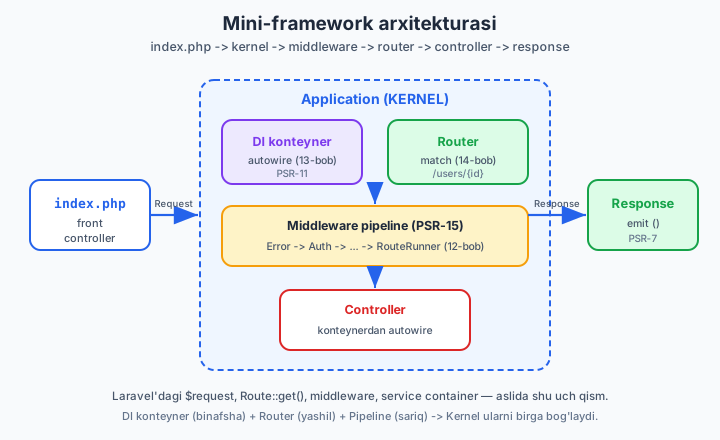
Diagrammada uchta rangli quti — DI konteyner (binafsha), Router (yashil), Middleware pipeline (sariq) — kernel ichida birga ishlaydi. index.php so'rov quradi, kernel uni pipeline orqali kontrollerga olib boradi, kontroller Response qaytaradi, u emit qilinadi.
1-qism: PSR-7 — minimal so'rov va javob
Boshlash uchun so'rov va javob obyektlari kerak. To'liq PSR-7 paketi katta (nyholm/psr7), lekin frameworkning mexanikasini ko'rsatish uchun bizga uchta narsa yetadi: so'rovdan header o'qish, so'rovga atribut biriktirish (auth middleware foydalanuvchini shu yerga qo'yadi) va javobni immutable qurish. 11-bobdagi immutability tamoyilini saqlaymiz: withX() metodlari yangi nusxa qaytaradi.
<?php

declare(strict_types=1);

// PSR-7 ning bizga kerakli minimal qismi (illustrativ).
// Haqiqiy loyihada: composer require nyholm/psr7
interface MessageInterface
{
    public function getHeaders(): array;
    public function getHeaderLine(string $name): string;
    public function withHeader(string $name, string $value): static;
    public function getBody(): string;
}

final class ServerRequest implements MessageInterface
{
    /** @var array<string,mixed> ixtiyoriy atributlar (router/auth shu yerga yozadi) */
    private array $attributes = [];

    public function __construct(
        public readonly string $method,
        public readonly string $path,
        private array $headers = [],
        private string $body = '',
        public readonly array $query = [],
    ) {}

    public function getHeaders(): array
    {
        return $this->headers;
    }

    public function getHeaderLine(string $name): string
    {
        // Header nomlari katta-kichik harfga befarq -> kalitni kichraytiramiz.
        return $this->headers[strtolower($name)] ?? '';
    }

    public function withHeader(string $name, string $value): static
    {
        $clone = clone $this;                     // immutable: yangi nusxa
        $clone->headers[strtolower($name)] = $value;
        return $clone;
    }

    public function getBody(): string
    {
        return $this->body;
    }

    /** Atribut o'qish (masalan, autentifikatsiya qilingan foydalanuvchi). */
    public function getAttribute(string $name, mixed $default = null): mixed
    {
        return $this->attributes[$name] ?? $default;
    }

    /** Immutable: atribut qo'shilgan YANGI so'rov qaytaradi. */
    public function withAttribute(string $name, mixed $value): static
    {
        $clone = clone $this;
        $clone->attributes[$name] = $value;
        return $clone;
    }
}
Javob ham xuddi shunday immutable, lekin unga ikkita qulay fabrika qo'shamiz — json() va html() — chunki bizning mini-app JSON ham, HTML ham qaytaradi:
<?php

declare(strict_types=1);

final class Response implements MessageInterface
{
    public function __construct(
        public readonly int $status = 200,
        private array $headers = [],
        private string $body = '',
    ) {}

    public function getHeaders(): array
    {
        return $this->headers;
    }

    public function getHeaderLine(string $name): string
    {
        return $this->headers[strtolower($name)] ?? '';
    }

    public function withHeader(string $name, string $value): static
    {
        $clone = clone $this;
        $clone->headers[strtolower($name)] = $value;
        return $clone;
    }

    public function getStatus(): int
    {
        return $this->status;
    }

    public function getBody(): string
    {
        return $this->body;
    }

    /** JSON javob fabrikasi (Content-Type bilan birga). */
    public static function json(mixed $data, int $status = 200): self
    {
        $json = json_encode($data, JSON_UNESCAPED_UNICODE | JSON_PRETTY_PRINT);
        return new self($status, ['content-type' => 'application/json; charset=utf-8'], $json);
    }

    /** HTML javob fabrikasi. */
    public static function html(string $html, int $status = 200): self
    {
        return new self($status, ['content-type' => 'text/html; charset=utf-8'], $html);
    }
}
Eslatma: bu — soddalashtirilgan PSR-7. Haqiqiy
ResponseInterfacedagetStatusCode(),StreamInterfacebody,withStatus()va boshqalar bor. Biz mexanikaga e'tibor qaratamiz; frameworkning mantiqi bir xil qoladi. To'liq PSR-7 uchun 16-bobdanyholm/psr7bilan ishlaymiz.
2-qism: PSR-15 — middleware kontrakti (inline)
Pipeline yadrosi PSR-15 ning ikki interfeysiga tayanadi. Ularni inline ko'rsatamiz, toki o'quvchi kontraktni ko'rsin (real loyihada composer require psr/http-server-middleware):
<?php

declare(strict_types=1);

// PSR-15 (psr/http-server-handler + psr/http-server-middleware) kontrakti.
interface RequestHandlerInterface
{
    public function handle(ServerRequest $request): Response;
}

interface MiddlewareInterface
{
    // So'rovni qabul qiladi; ish qiladi; $handler ga uzatadi YOKI erta javob qaytaradi.
    public function process(ServerRequest $request, RequestHandlerInterface $handler): Response;
}
Bu ikki interfeys — butun pipeline'ning butun shartnomasi. Middleware ikki ish qila oladi: (1) $handler->handle($request) ni chaqirib ichkariga uzatish, (2) $handler ni chaqirmasdan erta javob qaytarish (masalan, auth muvaffaqiyatsiz bo'lsa 401). 12-bobda bu "piyoz" (onion) tartibini batafsil ko'rgandik.
Pipeline tartibi: "piyoz" eslatmasi
Tartibni mustahkamlash uchun kichik mustaqil misol (uni alohida ishga tushirib ko'ring):
<?php
declare(strict_types=1);

interface Handler { public function handle(string $req): string; }
interface Mw { public function process(string $req, Handler $next): string; }

final class LogMw implements Mw {
    public function __construct(private string $tag) {}
    public function process(string $req, Handler $next): string {
        echo ">> kirish: {$this->tag}\n";
        $res = $next->handle($req);          // ichkariga uzatadi
        echo "<< chiqish: {$this->tag}\n";
        return $res . " [{$this->tag}]";     // qaytishda javobni o'raydi
    }
}

final class Dispatcher implements Handler {
    /** @param Mw[] $stack */
    public function __construct(private array $stack, private Handler $final) {}
    public function handle(string $req): string {
        if ($this->stack === []) return $this->final->handle($req);
        $mw = array_shift($this->stack);
        return $mw->process($req, new self($this->stack, $this->final));
    }
}

final class Core implements Handler {
    public function handle(string $req): string { echo "** YADRO **\n"; return "javob"; }
}

$d = new Dispatcher([new LogMw('A'), new LogMw('B')], new Core());
echo "Natija: " . $d->handle("so'rov") . "\n";
Ishga tushirsangiz, aniq shu chiqadi:
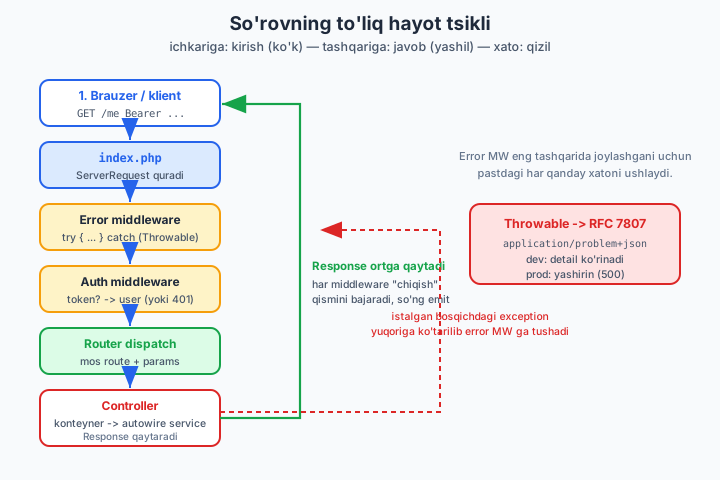
So'rov tashqaridan ichkariga (A -> B -> yadro), javob esa ichkaridan tashqariga (B -> A) yuradi. Birinchi qo'shilgan middleware oxirgi bo'lib javobni ko'radi — shuning uchun ErrorMiddleware ni eng birinchi (eng tashqi) qatlam qilamiz: u pastdagi barcha xatolarni ushlay oladi.
3-qism: DI konteyner — autowire bilan (PSR-11)
13-bobdagi konteyner mexanizmini eslatib, frameworkga ulanadigan ko'rinishda quramiz. Kalit imkoniyat — autowire: agar Container::get('UserController') so'ralsa-yu, ro'yxatga olinmagan bo'lsa, konteyner Reflection bilan uning konstruktorini o'qib, har bir parametrni rekursiv o'zi yechadi (bu mexanizm 08-bobdagi Reflection ga tayanadi).
<?php

declare(strict_types=1);

// PSR-11 (psr/container) kontrakti — inline.
interface NotFoundExceptionInterface extends \Throwable {}
final class NotFoundException extends \RuntimeException implements NotFoundExceptionInterface {}

interface ContainerInterface
{
    public function get(string $id): mixed;
    public function has(string $id): bool;
}

final class Container implements ContainerInterface
{
    /** @var array<string,\Closure> qo'lda ro'yxatga olingan fabrikalar */
    private array $factories = [];
    /** @var array<string,mixed> bir marta yaratilgan (singleton) nusxalar */
    private array $instances = [];

    public function set(string $id, \Closure $factory): void
    {
        $this->factories[$id] = $factory;
        unset($this->instances[$id]);
    }

    public function has(string $id): bool
    {
        return isset($this->factories[$id]) || class_exists($id);
    }

    public function get(string $id): mixed
    {
        if (isset($this->instances[$id])) {
            return $this->instances[$id];          // singleton: qayta ishlatamiz
        }
        if (isset($this->factories[$id])) {
            return $this->instances[$id] = ($this->factories[$id])($this);
        }
        if (class_exists($id)) {
            return $this->instances[$id] = $this->autowire($id);  // sehr shu yerda
        }
        throw new NotFoundException("Xizmat topilmadi: {$id}");
    }

    /** Konstruktor parametrlarini Reflection orqali avtomatik to'ldiradi. */
    private function autowire(string $class): object
    {
        $ctor = (new \ReflectionClass($class))->getConstructor();
        if ($ctor === null) {
            return new $class();                   // konstruktor yo'q -> oddiy new
        }
        $args = [];
        foreach ($ctor->getParameters() as $param) {
            $type = $param->getType();
            if ($type instanceof \ReflectionNamedType && !$type->isBuiltin()) {
                $args[] = $this->get($type->getName());   // bog'liqlikni rekursiv yechadi
            } elseif ($param->isDefaultValueAvailable()) {
                $args[] = $param->getDefaultValue();
            } else {
                throw new NotFoundException(
                    "Avtowire qila olmadim: {$class}::\${$param->getName()}"
                );
            }
        }
        return new $class(...$args);
    }
}
Autowire ning kuchini ko'rish uchun mustaqil misol (uni ishga tushiring):
<?php
declare(strict_types=1);
// ... yuqoridagi Container va interfeyslar shu yerda bo'lsin ...

final class Db { public string $dsn = 'sqlite::memory:'; }
final class Repo { public function __construct(public Db $db) {} }
final class Service { public function __construct(public Repo $repo) {} }

$c = new Container();
$svc = $c->get(Service::class);          // Service -> Repo -> Db avtomatik qurildi!
echo $svc->repo->db->dsn, "\n";          // sqlite::memory:
var_dump($c->get(Service::class) === $svc);  // bool(true) -> singleton
get(Service::class) ni so'radik — konteyner Service konstruktorida Repo kerakligini ko'rdi, Repo ni qurish uchun Db kerakligini ko'rdi, hammasini o'zi zanjirma-zanjir yasadi. Biz hech qaerda new Db() yozmadik. Laravel'dagi "service container" aynan shu — sinfni so'raysiz, u bog'liqliklarni o'zi keltiradi.
4-qism: Router — regex bilan moslash
14-bobdagi routerni frameworkga moslab quramiz. Har bir route — method, pattern, handler ([Controller::class, 'metod']) va o'ziga xos middleware ro'yxati. Router muhim detalni hisobga oladi: agar yo'l mos kelsa-yu, metod mos kelmasa — bu 404 emas, 405 Method Not Allowed.
<?php

declare(strict_types=1);

final class Route
{
    public function __construct(
        public readonly string $method,
        public readonly string $pattern,
        public readonly mixed $handler,           // [Controller::class, 'metod']
        public readonly array $middleware = [],   // shu route'ga xos middleware id'lari
    ) {}
}

final class Router
{
    /** @var Route[] */
    private array $routes = [];

    public function add(string $method, string $pattern, mixed $handler, array $middleware = []): void
    {
        $this->routes[] = new Route(strtoupper($method), $pattern, $handler, $middleware);
    }

    public function get(string $p, mixed $h, array $m = []): void { $this->add('GET', $p, $h, $m); }
    public function post(string $p, mixed $h, array $m = []): void { $this->add('POST', $p, $h, $m); }

    /**
     * So'rovga mos route topadi.
     * @return array{0:Route,1:array<string,string>}|array{0:'405',1:array}|null
     */
    public function match(ServerRequest $request): ?array
    {
        $pathMatched = false;
        foreach ($this->routes as $route) {
            if (preg_match($this->toRegex($route->pattern), $request->path, $m) === 1) {
                $pathMatched = true;
                if ($route->method === $request->method) {
                    // Faqat nomli ({id} kabi) parametrlarni qoldiramiz.
                    $params = array_filter($m, 'is_string', ARRAY_FILTER_USE_KEY);
                    return [$route, $params];
                }
            }
        }
        if ($pathMatched) {
            return ['405', []];      // yo'l bor, metod yo'q -> 405
        }
        return null;                 // yo'l ham yo'q -> 404
    }

    /** "/users/{id}" -> "#^/users/(?P<id>[^/]+)$#" */
    private function toRegex(string $pattern): string
    {
        $regex = preg_replace('#\{(\w+)\}#', '(?P<$1>[^/]+)', $pattern);
        return '#^' . $regex . '$#';
    }
}
5-qism: pipeline yadrosi — middleware'larni route'ga bog'lash
Endi eng nozik qism: middleware pipeline'ning oxiri route handler'ni chaqirishi kerak. Buning uchun ikki RequestHandlerInterface implementatsiyasi yozamiz:
RouteRunner— pipeline oxiri. U kontrollerni konteynerdan autowire qilib, mos metodni chaqiradi.MiddlewareDispatcher— middleware'larni matryoshka qilib bir-biriga ulaydi (12-bobdagiDispatcherning aniq nusxasi).
<?php

declare(strict_types=1);

/** Pipeline oxiri: route handler'ni konteynerdan autowire qilib chaqiradi. */
final class RouteRunner implements RequestHandlerInterface
{
    public function __construct(
        private readonly Container $container,
        private readonly mixed $handler,    // [Controller::class, 'metod']
        private readonly array $params,
    ) {}

    public function handle(ServerRequest $request): Response
    {
        [$class, $method] = $this->handler;
        $controller = $this->container->get($class);   // <-- autowire shu yerda
        return $controller->$method($request, $this->params);
    }
}

/** Middleware'larni ketma-ket bog'lovchi handler (matryoshka). */
final class MiddlewareDispatcher implements RequestHandlerInterface
{
    /** @param MiddlewareInterface[] $stack */
    public function __construct(
        private array $stack,
        private readonly RequestHandlerInterface $final,
    ) {}

    public function handle(ServerRequest $request): Response
    {
        if ($this->stack === []) {
            return $this->final->handle($request);     // pipeline tugadi -> route
        }
        $middleware = array_shift($this->stack);
        $next = new self($this->stack, $this->final);  // qolgan stack -> keyingi handler
        return $middleware->process($request, $next);
    }
}
Diqqat:
RouteRunner::handle()da$this->container->get($class)chaqiruvi butun frameworkning belidagi tugun: aynan shu joyda router (qaysi kontroller) va konteyner (kontrollerni qanday qurish) birlashadi. Laravel route'ni controller'gaRoute::get('/x', [Ctrl::class, 'm'])deb bog'laganda, ichkarida xuddi shunday — controller'ni o'zining konteyneridan oladi.
6-qism: KERNEL — Application sinfi
Mana cho'qqi. Application — barcha bo'laklarni bog'laydigan kernel. Uning yagona umumiy metodi handle(ServerRequest): Response:
- Router'dan mos route topadi (yo'q bo'lsa 404, metod mos kelmasa 405 — Problem Details formatida).
- Route'ga xos middleware'larni konteynerdan oladi va global middleware bilan birlashtiradi.
RouteRunnerni pipeline oxiriga qo'yib,MiddlewareDispatcherni ishga tushiradi.
<?php

declare(strict_types=1);

final class Application
{
    /** @param MiddlewareInterface[] $globalMiddleware har so'rovga qo'llanadi */
    public function __construct(
        private readonly Container $container,
        private readonly Router $router,
        private array $globalMiddleware = [],
    ) {}

    public function handle(ServerRequest $request): Response
    {
        $match = $this->router->match($request);

        if ($match === null) {                         // mos yo'l yo'q
            return $this->problem('Not Found', 404);
        }
        if ($match[0] === '405') {                      // yo'l bor, metod yo'q
            return $this->problem('Method Not Allowed', 405);
        }

        [$route, $params] = $match;

        // Route middleware id'larini konteynerdan haqiqiy obyektga aylantiramiz.
        $routeMiddleware = array_map(
            fn(string $id): MiddlewareInterface => $this->container->get($id),
            $route->middleware
        );
        $stack = [...$this->globalMiddleware, ...$routeMiddleware];

        $runner = new RouteRunner($this->container, $route->handler, $params);
        $dispatcher = new MiddlewareDispatcher($stack, $runner);

        return $dispatcher->handle($request);
    }

    /** Router darajasidagi xatolar uchun RFC 7807 Problem Details. */
    private function problem(string $title, int $status): Response
    {
        return Response::json(
            ['type' => 'about:blank', 'title' => $title, 'status' => $status],
            $status
        )->withHeader('content-type', 'application/problem+json');
    }
}
Diqqat qiling: kernelda biror biznes-logika yo'q. U faqat rejissyor: kim kimni qachon chaqirishini boshqaradi. Butun "framework"ning mohiyati shu ~40 qatorda.
7-qism: Xato boshqaruvi — ErrorMiddleware (RFC 7807)
Eng muhim production-detal: istalgan joyda otilgan Throwable foydalanuvchiga chiroyli, standart javob bo'lib qaytishi kerak — oq ekran yoki stack-trace emas. Buni middleware bilan qilamiz, chunki middleware butun pipeline'ni try/catch ga o'rashi mumkin. Format — 01-bobdagi RFC 7807 Problem Details (application/problem+json).
Dev/prod farqi muhim: dev'da to'liq tafsilot (detail, exception) ko'rsatamiz, prod'da 500 xatolarda ichki ma'lumotni yashiramiz (foydalanuvchiga faqat "Internal Server Error").
<?php

declare(strict_types=1);

/** Boshqariladigan HTTP xato (aniq status bilan). */
class HttpException extends \RuntimeException
{
    public function __construct(public readonly int $status, string $message)
    {
        parent::__construct($message);
    }
}

final class ErrorMiddleware implements MiddlewareInterface
{
    public function __construct(private readonly bool $debug = false) {}

    public function process(ServerRequest $request, RequestHandlerInterface $handler): Response
    {
        try {
            return $handler->handle($request);     // butun pastki pipeline shu yerda
        } catch (\Throwable $e) {
            $status = $e instanceof HttpException ? $e->status : 500;
            $problem = [
                'type'   => 'about:blank',
                'title'  => $e instanceof HttpException ? $e->getMessage() : 'Internal Server Error',
                'status' => $status,
            ];
            if ($this->debug && $status >= 500) {
                // Faqat dev'da: ichki tafsilot. Prod'da yashirin (ma'lumot sizib chiqmasin).
                $problem['detail'] = $e->getMessage();
                $problem['exception'] = $e::class;
            }
            return Response::json($problem, $status)
                ->withHeader('content-type', 'application/problem+json');
        }
    }
}
Nega
ErrorMiddlewareeng tashqi qatlam? "Piyoz" tartibida birinchi qo'shilgan middleware oxirgi bo'lib chiqadi va u o'rab olgan hamma narsa uningtryichida bo'ladi. Shuning uchun kernelda uniglobalMiddlewarening birinchi elementi qilamiz — shunda auth, router va kontroller'dagi har qanday xato unga tushadi. (HttpException(401)ham xuddi shu yo'l bilan ushlanadi va to'g'ri statusga aylanadi.)
8-qism: Auth middleware — RBAC guard'ni ulash (03-bobdan)
03-bobda guard g'oyasini ko'rgandik: so'rovni amalga qo'yishdan oldin "kimsan?" (401) va "huquqing bormi?" (403) ni tekshirish. Endi uni PSR-15 middleware sifatida pipeline'ga ulaymiz. U tokenni tekshiradi, topilmasa HttpException(401) otadi (uni ErrorMiddleware ushlaydi), topilsa foydalanuvchini so'rovga atribut sifatida biriktiradi — shunda kontroller $request->getAttribute('user') bilan oladi.
<?php

declare(strict_types=1);

final class AuthMiddleware implements MiddlewareInterface
{
    /** @param array<string,array{id:int,role:string}> $tokens token -> foydalanuvchi */
    public function __construct(private readonly array $tokens) {}

    public function process(ServerRequest $request, RequestHandlerInterface $handler): Response
    {
        $auth = $request->getHeaderLine('authorization');
        $token = str_starts_with($auth, 'Bearer ') ? substr($auth, 7) : '';

        if (!isset($this->tokens[$token])) {
            throw new HttpException(401, 'Unauthorized');   // ErrorMiddleware ushlaydi
        }
        // Foydalanuvchini so'rovga biriktiramiz (immutable -> yangi so'rov).
        $request = $request->withAttribute('user', $this->tokens[$token]);
        return $handler->handle($request);
    }
}
Real loyihada bu yerda 04-bobdagi JWT ni dekod qilasiz yoki bazadan sessiyani o'qiysiz; agar 403 kerak bo'lsa (huquq yetmasa), HttpException(403, 'Forbidden') otasiz. Mexanika o'zgarmaydi.
9-qism: Service'lar va kontrollerlar
Frameworkning "foydalanuvchi kodi" qismi — DI bilan inject qilinadigan service'lar va kontroller'lar. Diqqat: kontroller konstruktorida shunchaki tipni so'raydi (GreetingService $greeting) — konteyner uni o'zi keltiradi.
<?php

declare(strict_types=1);

/* --- Service'lar (DI bilan inject qilinadi) --- */

final class GreetingService
{
    public function greet(string $name): string
    {
        return "Salom, {$name}!";
    }
}

final class UserRepository
{
    /** @var array<int,array{id:int,name:string}> (real loyihada PDO) */
    private array $users = [
        1 => ['id' => 1, 'name' => 'Laylo'],
        2 => ['id' => 2, 'name' => 'Sardor'],
    ];

    public function find(int $id): ?array
    {
        return $this->users[$id] ?? null;
    }
}

/* --- Kontrollerlar --- */

final class HomeController
{
    // GreetingService konteyner tomonidan autowire qilinadi.
    public function __construct(private readonly GreetingService $greeting) {}

    public function index(ServerRequest $request, array $params): Response
    {
        return Response::html("<h1>{$this->greeting->greet('Dunyo')}</h1>");
    }
}

final class UserController
{
    public function __construct(private readonly UserRepository $repo) {}

    public function show(ServerRequest $request, array $params): Response
    {
        $id = (int) ($params['id'] ?? 0);
        $user = $this->repo->find($id);
        if ($user === null) {
            throw new HttpException(404, 'User Not Found');   // -> Problem Details
        }
        return Response::json($user);
    }

    public function me(ServerRequest $request, array $params): Response
    {
        // Auth middleware bu atributni qo'ygan.
        $user = $request->getAttribute('user');
        return Response::json(['authenticated' => true, 'user' => $user]);
    }
}

final class BoomController
{
    public function crash(ServerRequest $request, array $params): Response
    {
        // Ataylab: kutilmagan xato. ErrorMiddleware uni 500 ga aylantirishi kerak.
        throw new \LogicException('Bu ataylab portlash - error middleware ushlashi kerak');
    }
}
10-qism: Bootstrap/config — service va route'larni ro'yxatga olish
Endi hammasini bir joyda ulaymiz: konteynerga service'larni, routerga route'larni, kernelga global middleware'ni ro'yxatdan o'tkazamiz. Bu — Laravel'dagi routes/web.php + service provider'larning soddalashtirilgan analogi.
<?php

declare(strict_types=1);

function bootstrap(bool $debug): Application
{
    $container = new Container();

    // Service'lar (singleton fabrikalari).
    $container->set(GreetingService::class, fn() => new GreetingService());
    $container->set(UserRepository::class, fn() => new UserRepository());

    // Auth middleware (token jadvali bilan).
    $container->set(AuthMiddleware::class, fn() => new AuthMiddleware([
        'sirli-token-123' => ['id' => 1, 'role' => 'admin'],
    ]));

    // Route'lar. /me marshruti AuthMiddleware bilan himoyalangan.
    $router = new Router();
    $router->get('/', [HomeController::class, 'index']);
    $router->get('/users/{id}', [UserController::class, 'show']);
    $router->get('/me', [UserController::class, 'me'], [AuthMiddleware::class]);
    $router->get('/boom', [BoomController::class, 'crash']);

    // Global middleware: ErrorMiddleware eng tashqi (birinchi) qatlam.
    return new Application($container, $router, [new ErrorMiddleware($debug)]);
}
Haqiqiy index.php (front controller) skeleti
Jonli serverda kirish nuqtasi shunday ko'rinadi. Bu blok faqat web-server ostida mazmunli (in-process testda emit o'rniga Response ni bevosita tekshiramiz):
<?php

declare(strict_types=1);

// require __DIR__ . '/../vendor/autoload.php';   // Composer autoload

// 1. Bootstrap (dev'mi yoki prod'mi?).
// $app = bootstrap(debug: getenv('APP_ENV') !== 'prod');

// 2. Global'lardan ($_SERVER, php://input) ServerRequest qurish.
// $request = ServerRequestFactory::fromGlobals();

// 3. Kernel orqali javob olish.
// $response = $app->handle($request);

// 4. Javobni emit qilish (brauzerga yuborish).
final class Emitter
{
    public static function emit(Response $response): void
    {
        http_response_code($response->getStatus());
        foreach ($response->getHeaders() as $name => $value) {
            header("{$name}: {$value}", true);
        }
        echo $response->getBody();
    }
}
// Emitter::emit($response);
11-qism: To'liq mini-app'ni JARAYON ICHIDA ishga tushirish
Endi eng qiziq qism: jonli server ko'tarmasdan, butun frameworkni jarayon ichida sinaymiz. Bu — frameworklarni test qilishning standart usuli (Laravel/Symfony funksional testlari ham aynan shunday $response = $app->handle($request) qiladi). Yuqoridagi barcha bloklar (PSR-7, PSR-15, konteyner, router, pipeline, kernel, middleware'lar, service va kontrollerlar, bootstrap) bitta faylda turibdi deb faraz qiling, va oxiriga shu qism qo'shiladi:
<?php
declare(strict_types=1);
// ... yuqoridagi BARCHA bloklar shu faylda ...

$app = bootstrap(debug: true);

function simulate(Application $app, ServerRequest $req): void
{
    $res = $app->handle($req);
    echo sprintf(
        "%-4s %-14s -> %d  [%s]\n",
        $req->method,
        $req->path,
        $res->getStatus(),
        $res->getHeaderLine('content-type')
    );
    echo '    ' . str_replace("\n", "\n    ", trim($res->getBody())) . "\n\n";
}

echo "=== Mini-framework: in-process so'rovlar ===\n\n";

simulate($app, new ServerRequest('GET', '/'));                                    // HTML 200
simulate($app, new ServerRequest('GET', '/users/1'));                             // JSON 200
simulate($app, new ServerRequest('GET', '/users/999'));                           // 404
simulate($app, new ServerRequest('GET', '/me'));                                  // 401 (tokensiz)
simulate($app, new ServerRequest('GET', '/me', ['authorization' => 'Bearer sirli-token-123'])); // 200
simulate($app, new ServerRequest('POST', '/users/1'));                            // 405
simulate($app, new ServerRequest('GET', '/yoq'));                                 // 404
simulate($app, new ServerRequest('GET', '/boom'));                                // 500 + debug detail
Ishga tushirilganda (ushbu bobdagi kod haqiqatan php bilan tekshirilgan) aynan shu chiqadi:
=== Mini-framework: in-process so'rovlar ===

GET  /              -> 200  [text/html; charset=utf-8]
    <h1>Salom, Dunyo!</h1>

GET  /users/1       -> 200  [application/json; charset=utf-8]
    {
        "id": 1,
        "name": "Laylo"
    }

GET  /users/999     -> 404  [application/problem+json]
    {
        "type": "about:blank",
        "title": "User Not Found",
        "status": 404
    }

GET  /me            -> 401  [application/problem+json]
    {
        "type": "about:blank",
        "title": "Unauthorized",
        "status": 401
    }

GET  /me            -> 200  [application/json; charset=utf-8]
    {
        "authenticated": true,
        "user": {
            "id": 1,
            "role": "admin"
        }
    }

POST /users/1       -> 405  [application/problem+json]
    {
        "type": "about:blank",
        "title": "Method Not Allowed",
        "status": 405
    }

GET  /yoq           -> 404  [application/problem+json]
    {
        "type": "about:blank",
        "title": "Not Found",
        "status": 404
    }

GET  /boom          -> 500  [application/problem+json]
    {
        "type": "about:blank",
        "title": "Internal Server Error",
        "status": 500,
        "detail": "Bu ataylab portlash - error middleware ushlashi kerak",
        "exception": "LogicException"
    }
Bu chiqishni o'qing — har qatorda butun frameworkning bir imkoniyati ko'rinadi:
GET /— HTML javob,GreetingServiceautowire bo'lib kontrollerga inject qilindi.GET /users/1— JSON javob,UserRepositoryautowire.GET /users/999— kontrollerHttpException(404)otdi -> Problem Details.GET /me(tokensiz) —AuthMiddleware401 otdi -> guard ishladi.GET /me(Bearer token) — auth o'tdi, foydalanuvchi atribut orqali kontrollerga yetdi.POST /users/1— yo'l bor, metod yo'q -> 405.GET /yoq— yo'l yo'q -> 404.GET /boom— kutilmaganLogicException-> 500, dev'dadetailko'rinadi (prod'da yashirin bo'lardi).
Bir o'qishda: router + DI autowire + middleware pipeline + auth guard + RFC 7807 xato boshqaruvi + JSON/HTML — hammasi ~250 qatorda, jonli server'siz, to'liq ishlaydi.
12-qism: Slim / Symfony / Laravel internals bilan solishtirish
Endi eng qimmatli xulosa. Siz qurgan mexanizmlar — aynan sanoat frameworklari ichidagi mexanizmlar. Faqat ular yanada sayqallangan, optimallashtirilgan va xususiyatga boy. Mana to'g'ridan-to'g'ri xarita:
| Bizning kod | Slim 4 | Symfony | Laravel |
|---|---|---|---|
ServerRequest (PSR-7) |
PSR-7 (nyholm/slim-psr7) | Request (HttpFoundation) |
Illuminate\Http\Request |
Application::handle() |
App::handle() |
HttpKernel::handle() |
Kernel::handle() |
MiddlewareDispatcher (PSR-15) |
PSR-15 middleware | RequestStack + listeners |
middleware "pipeline" |
Container (autowire) |
PSR-11 (PHP-DI) | Symfony DI Container | service container (app()) |
Router::match() |
RouteCollector (FastRoute) |
Symfony Routing | Route::get(...) |
[Ctrl::class, 'm'] handler |
route'ga callable | controller resolver | controller'ni konteynerdan oladi |
ErrorMiddleware (RFC 7807) |
ErrorMiddleware |
ExceptionListener |
Handler::render() |
AuthMiddleware |
middleware | Security firewall | auth middleware |
$request->getAttribute('user') |
request attribute | $request->attributes |
$request->user() |
Ya'ni Laravel'da yozadigan tanish kod aslida nima qilishini endi mexanik tushunasiz:
// Laravel:
Route::get('/users/{id}', [UserController::class, 'show'])->middleware('auth');

// Ichkarida (soddalashtirilgan) — aynan biz qurgan narsa:
// 1. Router /users/{id} ni topadi, {id} ni ajratadi.
// 2. 'auth' middleware pipeline'ga qo'shiladi (bizning AuthMiddleware kabi).
// 3. UserController service container'dan autowire bo'ladi (bizning Container kabi).
// 4. show() chaqiriladi, javob (Response) middleware'lar orqali ortga qaytadi.
// Laravel kontrollerida:
public function show(Request $request, int $id) { ... }
// $request -> bizning ServerRequest. type-hint qilingan service'lar -> autowire.
Intervyu uchun: "Laravel'da
$requestqayerdan keladi?" degan savolga endi "PHP super-global'lardan ($_SERVER,php://input)ServerRequestquriladi va kernel uni middleware pipeline orqali kontrollerga uzatadi" deya olasiz. "Middleware qanday ishlaydi?" — "PSR-15 piyoz: har qatlam so'rovni keyingisiga uzatadi yoki erta javob qaytaradi." "Service container nima?" — "Reflection bilan konstruktor bog'liqliklarini rekursiv yechadigan autowire konteyner." Sehr emas — mexanika.
Qachon o'z framework, qachon tayyor?
To'g'ridan-to'g'ri javob: deyarli har doim — tayyor framework (Laravel, Symfony, yoki Slim/Mezzio mikro-framework). Sabablari:
- Xavfsizlik — tayyor framework yillar davomida auditdan o'tgan; siz CSRF, XSS, SQL-injection himoyasini noldan to'g'ri yozolmaysiz.
- Ekotizim — minglab paketlar (auth, queue, ORM, mailer) tayyor ulanadi.
- Jamoa — yangi dasturchi Laravel'ni biladi; sizning o'z frameworkingizni o'rganishi kerak.
- Texnik qarz — o'z frameworkingizni qo'llab-quvvatlash, hujjatlash, yangilash — bu doimiy yuk.
Lekin — bu bobni yozish vaqtingiz behuda ketmadi, aksincha bebaho:
- Ichini bilish production'da debug qilishni butunlay o'zgartiradi: "middleware tartibi noto'g'ri", "service singleton emas", "route konfliktda" kabi muammolarni darrov topasiz.
- Mikro-framework (Slim/Mezzio) tanlaganingizda yoki o'z paketingizni yozganingizda PSR-15/PSR-11 ni qo'lda ishlatasiz.
- Kichik, maxsus xizmatlar (bitta webhook qabul qiluvchi, lambda funksiya) uchun ba'zan ~200 qatorlik o'z kerneling Laravel'dan tezroq va yengilroq.
Oltin qoida: mahsulot uchun tayyor framework ishlat, lekin uning ichini o'z qo'ling bilan bir marta yozib ko'r. Ikkinchisi birinchisini ming barobar yaxshiroq foydalanuvchiga aylantiradi.
Yakuniy xulosa
- Framework — uchta mexanizmni bog'lovchi kernel: DI konteyner (qanday qurish) + router (qaysi kontroller) + middleware pipeline (qanday o'rash). Bizning
Application::handle()~40 qatorda hammasini birlashtirdi. - Oqim har doim bir xil:
index.php->ServerRequest-> middleware pipeline -> router dispatch -> kontroller (autowire) ->Response-> emit. - Xato boshqaruvi middleware bilan:
ErrorMiddlewareeng tashqi qatlam bo'lib, istalganThrowableni RFC 7807 Problem Details ga aylantiradi — dev'da batafsil, prod'da yashirin. - PSR'lar bog'lovchi yelim: PSR-7 (so'rov/javob), PSR-15 (middleware), PSR-11 (konteyner) — shu kontraktlar tufayli bo'laklar bir-biriga toza ulanadi (10-bob).
- In-process test jonli serversiz ishonchni beradi:
$response = $app->handle($request). - Sanoat frameworklari aynan shu — Slim/Symfony/Laravel ichida ham xuddi shu kernel + pipeline + container. Endi "sehr" siz uchun mexanika.
- Production'da tayyor framework ishlat, lekin ichini bilganing uchun uni chuqurroq egallaysan.
Keyingi bobda (16-bob) shu mini-framework ustiga Twig shablon mexanizmini ulaymiz — HTML javoblarni xavfsiz (auto-escaping bilan) va tartibli renderlash uchun.
Mashqlar
Oson
1. Application ga yangi GET /salom/{ism} route'ini qo'shing, u Response::json(['salom' => $ism]) qaytarsin. {ism} ni route parametridan oling. Qaysi mavjud kontrollerga metod qo'shasiz?
2. ErrorMiddleware da debug false bo'lganda GET /boom qaysi JSON ni qaytaradi? detail va exception maydonlari bo'ladimi? Nega?
3. simulate($app, new ServerRequest('DELETE', '/users/1')) qaysi status kod qaytaradi — 404 yoki 405? Nega? (Router::match() mantiqiga qarang.)
O'rta
4. Yangi LoggingMiddleware yozing: u har so'rovning method va path ini hamda javob status ini chiqarsin (echo). Uni global middleware qiling, lekin ErrorMiddleware dan keyin joylashtiring. Tartib nega muhim?
5. AuthMiddleware ga 403 qo'shing: token to'g'ri bo'lsa-yu, foydalanuvchi role 'admin' bo'lmasa, faqat /admin/* route'larida HttpException(403, 'Forbidden') otsin. Buni middleware'ning o'zida yoki route konfiguratsiyasida qilasizmi — qaysi biri toza?
6. Konteyner hozir class_exists($id) bo'lsa avtowire qiladi. Agar autowire qilinayotgan sinf konstruktorida skalyar parametr (int $timeout) bo'lsa-yu, unga default qiymat bo'lmasa nima bo'ladi? Buni sinab ko'ring va xato xabarini tushuntiring.
Qiyin
7. Application::handle() ni shunday o'zgartiringki, 404/405 javoblari ham middleware pipeline'dan o'tsin (hozir ular pipeline'ni chetlab o'tadi — masalan LoggingMiddleware 404'larni ko'rmaydi). Maslahat: "route topilmadi" holatini ham bir RequestHandlerInterface qiling.
8. Pipeline'ga per-route middleware tartibini sinab ko'ring: [ErrorMiddleware, AuthMiddleware] da agar AuthMiddleware 401 otsa, javob application/problem+json bo'lib qaytishini in-process test bilan tasdiqlang. Endi tartibni teskari qilsangiz ([AuthMiddleware, ErrorMiddleware]) nima buziladi?
Yechim — 3
405 Method Not Allowed qaytaradi. Router::match() barcha route'lar bo'ylab yuradi: /users/{id} yo'li DELETE /users/1 ga regex bo'yicha mos keladi (#^/users/(?P<id>[^/]+)$#), shuning uchun $pathMatched = true bo'ladi. Lekin ro'yxatdagi route GET metodida, so'rov esa DELETE — metod mos kelmaydi. Sikl tugagach $pathMatched rost bo'lgani uchun ['405', []] qaytariladi. Agar yo'lning o'zi hech bir route'ga mos kelmaganida (/yoq), $pathMatched false qolib 404 qaytardi. Bu farq REST API'da muhim: klient "yo'l noto'g'ri" (404) bilan "yo'l to'g'ri, lekin bu metod ruxsat etilmagan" (405) ni ajrata olishi kerak.
Yechim — 4
<?php
declare(strict_types=1);

final class LoggingMiddleware implements MiddlewareInterface
{
    public function process(ServerRequest $request, RequestHandlerInterface $handler): Response
    {
        $response = $handler->handle($request);     // avval pastki pipeline ishlasin
        // Endi javob statusini bilamiz -> log qilamiz.
        echo "[LOG] {$request->method} {$request->path} -> {$response->getStatus()}\n";
        return $response;
    }
}

// bootstrap() ichida global middleware tartibi:
// return new Application($container, $router, [
//     new ErrorMiddleware($debug),     // 1) eng tashqi: hamma xatoni ushlaydi
//     new LoggingMiddleware(),         // 2) undan keyin: log
// ]);
Nega ErrorMiddleware dan keyin? Agar LoggingMiddleware ErrorMiddleware dan oldin (tashqaroqda) bo'lsa va pastda 500 xato otilsa, ErrorMiddleware uni ushlab Response(500) ga aylantiradi — LoggingMiddleware shu 500 javobini ko'radi va log qiladi, hammasi joyida. Aksincha, LoggingMiddleware ichkarida (ErrorMiddleware'dan keyin) bo'lsa va pastda ushlanmagan exception otilsa, u $handler->handle() qatorida try siz uziladi — log qatori bajarilmaydi. Demak log qilingan status ishonchli bo'lishi uchun LoggingMiddleware ErrorMiddleware ning ichida (undan keyin ro'yxatda), ya'ni exception allaqachon javobga aylangandan keyin ishlashi kerak. Tartib middleware'da har doim shunday nozik — "kim kimni o'raydi" ni aniq o'ylash kerak.
Yechim — 7 (to'liq)
G'oya: hozir Application::handle() 404/405 ni Response qilib darrov qaytaradi va pipeline'ni chetlab o'tadi. Buni tuzatish uchun "route topilmadi" holatini ham bir RequestHandlerInterface ga aylantiramiz va uni pipeline oxiriga qo'yamiz — shunda global middleware (log, error) 404 ni ham ko'radi.
<?php
declare(strict_types=1);
// ... oldingi BARCHA bloklar (PSR-7, PSR-15, Container, Router, pipeline) shu yerda ...

/** Pipeline oxiri: route bo'lsa runner, bo'lmasa Problem Details qaytaradi. */
final class RouteDispatchHandler implements RequestHandlerInterface
{
    public function __construct(
        private readonly Container $container,
        private readonly Router $router,
    ) {}

    public function handle(ServerRequest $request): Response
    {
        $match = $this->router->match($request);

        if ($match === null) {
            return $this->problem('Not Found', 404);
        }
        if ($match[0] === '405') {
            return $this->problem('Method Not Allowed', 405);
        }

        [$route, $params] = $match;

        // Route'ga xos middleware'larni ham shu yerda zanjirga ulaymiz.
        $routeMiddleware = array_map(
            fn(string $id): MiddlewareInterface => $this->container->get($id),
            $route->middleware
        );
        $runner = new RouteRunner($this->container, $route->handler, $params);
        $dispatcher = new MiddlewareDispatcher($routeMiddleware, $runner);

        return $dispatcher->handle($request);
    }

    private function problem(string $title, int $status): Response
    {
        return Response::json(
            ['type' => 'about:blank', 'title' => $title, 'status' => $status],
            $status
        )->withHeader('content-type', 'application/problem+json');
    }
}

/** Yangi, soddalashgan kernel: faqat global pipeline'ni boshqaradi. */
final class Application2
{
    /** @param MiddlewareInterface[] $globalMiddleware */
    public function __construct(
        private readonly Container $container,
        private readonly Router $router,
        private array $globalMiddleware = [],
    ) {}

    public function handle(ServerRequest $request): Response
    {
        // Pipeline OXIRI endi router-dispatch handler -> 404 ham pipeline'dan o'tadi.
        $final = new RouteDispatchHandler($this->container, $this->router);
        $dispatcher = new MiddlewareDispatcher($this->globalMiddleware, $final);
        return $dispatcher->handle($request);
    }
}
Nima o'zgardi? Avval Application route'ni topib, keyin pipeline qurardi — natijada 404/405 javoblari hech qaysi global middleware'dan o'tmasdi. Endi tartib teskari: avval global pipeline (ErrorMiddleware, LoggingMiddleware...) ishlaydi, uning oxirida RouteDispatchHandler turadi. Demak:
- 404/405 javoblari endi butun global pipeline'dan o'tadi —
LoggingMiddlewareularni ham loglaydi,ErrorMiddlewareularni ham o'raydi. - Route'ga xos middleware (masalan
AuthMiddleware) esa faqat route topilgach ishlaydi — bu mantiqan to'g'ri, chunki auth tekshiruvi noma'lum route uchun ma'nosiz.
Bu — Slim 4 va Symfony ning aynan yondashuvi: routing ham middleware'ning bir qismi (Slim'da RoutingMiddleware). Frameworkning haqiqiy arxitekturasi shu — hamma narsa pipeline ichida, kernel faqat pipeline'ni ishga tushiradi.
Yechim — 8
Birinchi qism — [ErrorMiddleware, AuthMiddleware] (to'g'ri tartib):
<?php
declare(strict_types=1);
// ... BARCHA bloklar + bootstrap ...

$app = bootstrap(debug: true);
$res = $app->handle(new ServerRequest('GET', '/me'));   // tokensiz

assert($res->getStatus() === 401);
assert($res->getHeaderLine('content-type') === 'application/problem+json');
echo "401 + problem+json tasdiqlandi\n";
AuthMiddleware 401 otadi, lekin u ErrorMiddleware ichida (undan keyin) ishlagani uchun exception yuqoriga ko'tarilib ErrorMiddleware::process() ning catch ga tushadi -> chiroyli application/problem+json 401 bo'lib qaytadi.
Teskari tartib ([AuthMiddleware, ErrorMiddleware]) nima buziladi? Endi AuthMiddleware eng tashqi qatlam, ErrorMiddleware esa uning ichida. AuthMiddleware::process() $this->tokens da token yo'qligini ko'rib throw new HttpException(401, ...) qiladi — lekin bu throw AuthMiddlewarening o'zida, hech qanday try/catch bilan o'ralmagan (chunki yagona try ErrorMiddleware da, u esa ichkarida, allaqachon chaqirib bo'lingan handler zanjirida emas). Natijada exception butun pipeline'dan ushlanmagan holda chiqib ketadi va PHP fatal error beradi — foydalanuvchi chiroyli 401 o'rniga 500 (yoki oq ekran) oladi.
Xulosa: ErrorMiddleware doimo eng tashqi (birinchi) bo'lishi shart, aks holda undan tashqarida otilgan har qanday exception ushlanmaydi. Bu — middleware tartibidagi eng muhim qoidalardan biri.
⬅️ Oldingi: 14 — Routing va front controller · 🏠 README · Keyingi: 16 — Twig va xavfsiz shablon ➡️